
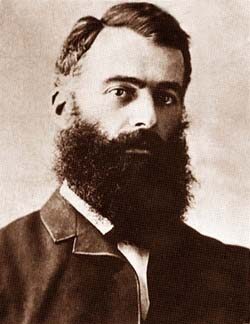
Lawrence Hargrave
Lawrence Hargrave was an Australian engineer and inventor. Born January 29, 1850, in Greenwich. Died July 14, 1915, in Darlinghurst. Educated at Queen Elizabeth School.
Facts
14 facts · 1 confirmed by two sources · 6 cited · 6 from one source · 1 where the sources disagree
What’s different
- Died: we show July 14, 1915 (Sources disagree). Wikipedia says July 6, 1915
Where this comes from
Papalocal keeps its own record. It started from these sources; what each one said is kept here as it was copied, so a change on their side never changes this page by itself. Tap one to read its version.
What Wikidata says · copied November 18, 2026 · revision 2558111585
- Described as
- Australian engineer and inventor (1850–1915)
- Born
- January 29, 1850 · 9 references
- Died
- July 14, 1915 · 4 references
- Born in
- Greenwich · 1 reference
- Died in
- Darlinghurst · 1 reference
- Buried in
- Waverley Cemetery
- Cause of death
- peritonitis · 1 reference
- Citizen of
- Australia; United Kingdom · 1 reference
- Occupation
- military flight engineer; engineer · 2 references; astronomer · 2 references; inventor
- Education
- Queen Elizabeth School
- Father
- John Hargrave
- Wikipedias with a page
- 20
Wikidata item Q522744 (wikidata.org/wiki/Q522744), public domain (CC0). Copied November 18, 2026.
What Wikipedia says · copied November 18, 2026 · revision 1373206173
Lawrence Hargrave, MRAeS, (29 January 1850 – 6 July 1915) was an Australian engineer, explorer, astronomer, inventor and aeronautical pioneer. He was perhaps best known for inventing the box kite, which was quickly adopted by other aircraft designers and subsequently formed the aerodynamic basis of early biplanes.
- Born, in its opening lines
- January 29, 1850
- Died, in its opening lines
- July 6, 1915
From the Wikipedia article “Lawrence Hargrave” (en.wikipedia.org/wiki/Lawrence_Hargrave), by its contributors, under CC BY-SA 4.0 (creativecommons.org/licenses/by-sa/4.0/). Copied November 18, 2026; not changed.
Confirmed Two sources agree. Cited One source, and it names where it got it. One source One source, without a reference of its own. Sources disagree The sources disagree. We show the best-supported value and keep theirs below.
