
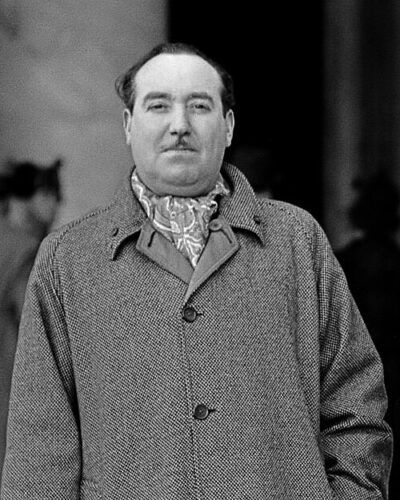
Lee Garmes
Lee Garmes was an American cinematographer. Born May 27, 1898, in Peoria. Died August 31, 1978, in Los Angeles. Awards include Academy Award for Best Cinematography.
Facts
12 facts · 2 confirmed by two sources · 3 cited · 7 from one source
Where this comes from
Papalocal keeps its own record. It started from these sources; what each one said is kept here as it was copied, so a change on their side never changes this page by itself. Tap one to read its version.
What Wikidata says · copied November 18, 2026 · revision 2559730562
- Described as
- American cinematographer (1898–1978)
- Other names
- Lee Dewey Garmes
- Born
- May 27, 1898 · 4 references
- Died
- August 31, 1978 · 2 references
- Born in
- Peoria
- Died in
- Los Angeles
- Buried in
- Grand View Memorial Park Cemetery · 1 reference
- Name at birth
- Lee Dewey Garmes
- Citizen of
- United States
- Occupation
- cinematographer · 1 reference; film producer; film director
- Awards
- Academy Award for Best Cinematography (1932) · 1 reference
- Spouse
- Ruth Hall · 1 reference
- Wikipedias with a page
- 18
Wikidata item Q1370195 (wikidata.org/wiki/Q1370195), public domain (CC0). Copied November 18, 2026.
What Wikipedia says · copied November 18, 2026 · revision 1317029406
Lee Garmes, A.S.C. (May 27, 1898 – August 31, 1978) was an American cinematographer. During his career, he worked with directors Howard Hawks, Max Ophüls, Josef von Sternberg, Alfred Hitchcock, King Vidor, Nicholas Ray and Henry Hathaway, whom he had met as a young man when the two first came to Hollywood in the silent era. He also co-directed two films with legendary screenwriter Ben Hecht: Angels Over Broadway and Actors and Sin.
- Born, in its opening lines
- May 27, 1898
- Died, in its opening lines
- August 31, 1978
From the Wikipedia article “Lee Garmes” (en.wikipedia.org/wiki/Lee_Garmes), by its contributors, under CC BY-SA 4.0 (creativecommons.org/licenses/by-sa/4.0/). Copied November 18, 2026; not changed.
Confirmed Two sources agree. Cited One source, and it names where it got it. One source One source, without a reference of its own. Sources disagree The sources disagree. We show the best-supported value and keep theirs below.
