
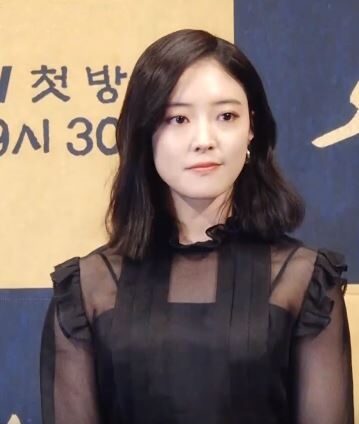
Lee Se-young
Lee Se-young is a South Korean actress. Born December 20, 1992, in Bucheon. Educated at Sungshin Women's University.
Facts
7 facts · 1 confirmed by two sources · 0 cited · 6 from one source
Where this comes from
Papalocal keeps its own record. It started from these sources; what each one said is kept here as it was copied, so a change on their side never changes this page by itself. Tap one to read its version.
What Wikidata says · copied November 18, 2026 · revision 2569854101
- Described as
- South Korean actress
- Other names
- I Se-yeong, Lee Se-yeong, Lee Se Young
- Born
- December 20, 1992 · 1 reference
- Born in
- Bucheon
- Citizen of
- South Korea
- Occupation
- film actor; actor
- Education
- Sungshin Women's University
- Website
- http://www.praintpc.com/bbs/board.php?bo_table=leeseyoung_info&wr_id=1
- Wikipedias with a page
- 22
Wikidata item Q623735 (wikidata.org/wiki/Q623735), public domain (CC0). Copied November 18, 2026.
What Wikipedia says · copied November 18, 2026 · revision 1382962750
Lee Se-young (Korean: 이세영; born December 20, 1992) is a South Korean actress. She debuted as a child actress in 1997 and was best known for her roles in Dae Jang Geum (2003), When I Turned Nine (2004), Lovely Rivals (2004), and The Wonder Years (2007). She is best known for her leading roles in The Crowned Clown (2019), The Red Sleeve (2021), The Law Cafe (2022), The Story of Park's Marriage Contract (2023), and What Comes After Love (2024).
Lee has received multiple awards and has been featured multiple times in Forbes magazine's Korea Power Celebrity 40 list. She is referred to as a "Historical Drama Queen" due to her prominent roles in several successful historical drama.
- Born, in its opening lines
- December 20, 1992
From the Wikipedia article “Lee Se-young” (en.wikipedia.org/wiki/Lee_Se-young), by its contributors, under CC BY-SA 4.0 (creativecommons.org/licenses/by-sa/4.0/). Copied November 18, 2026; not changed.
Confirmed Two sources agree. Cited One source, and it names where it got it. One source One source, without a reference of its own. Sources disagree The sources disagree. We show the best-supported value and keep theirs below.
