
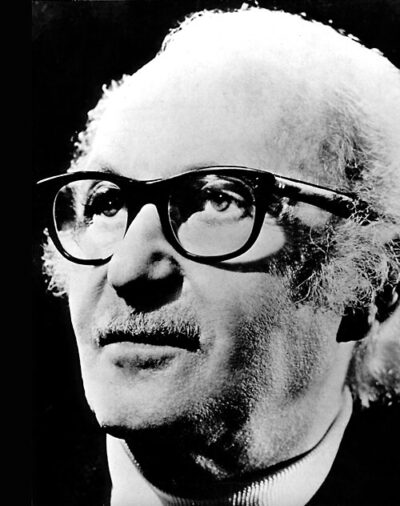
Lee Strasberg
Lee Strasberg was an American theatre director, actor and acting teacher. Born November 17, 1901, in Budaniv. Died February 17, 1982, in New York City. Awards include star on Hollywood Walk of Fame.
Facts
21 facts · 2 confirmed by two sources · 10 cited · 9 from one source
Where this comes from
Papalocal keeps its own record. It started from these sources; what each one said is kept here as it was copied, so a change on their side never changes this page by itself. Tap one to read its version.
What Wikidata says · copied November 13, 2026 · revision 2565548353
- Described as
- American theatre director, actor and acting teacher (1901–1982)
- Other names
- Israel Lee Strassberg
- Born
- November 17, 1901 · 10 references
- Died
- February 17, 1982 · 10 references
- Born in
- Budaniv
- Died in
- New York City · 1 reference
- Buried in
- Westchester Hills Cemetery
- Cause of death
- myocardial infarction
- Citizen of
- United States · 1 reference; Cisleithania
- Occupation
- actor · 1 reference; director · 1 reference; teacher; film actor · 1 reference; theatre manager · 1 reference; screenwriter · 1 reference; theatre director · 1 reference
- Awards
- star on Hollywood Walk of Fame · 1 reference
- Spouse
- Paula Strasberg (–1966) · 1 reference; Anna Strasberg (1967–) · 1 reference
- Children
- Susan Strasberg; John Strasberg
- Website
- https://www.methodactingstrasberg.com
- Wikipedias with a page
- 50
Wikidata item Q297945 (wikidata.org/wiki/Q297945), public domain (CC0). Copied November 13, 2026.
What Wikipedia says · copied November 13, 2026 · revision 1383644313
Lee Strasberg (born Israel Strassberg; November 17, 1901 – February 17, 1982) was an American acting coach and actor. Born in Budzanów, Austria-Hungary, he immigrated to the United States in 1909. He co-founded, with theatre directors Harold Clurman and Cheryl Crawford, the Group Theatre in 1931, which was hailed as "America's first true theatrical collective". In 1951, he became director of the nonprofit Actors Studio in New York City, considered "the nation's most prestigious acting school", and, in 1966, he was involved in the creation of Actors Studio West in Los Angeles.
Although other highly regarded teachers also developed versions of "The Method", Lee Strasberg is considered to be the "father of method acting in America", according to author Mel Gussow. From the 1920s until his death in 1982, "he revolutionized the art of acting by having a profound influence on performance in American theater and film". From his base in New York, Strasberg trained several generations of theatre and film notables, including Marlon Brando, Anne Bancroft, Dustin Hoffman, Montgomery Clift, James Dean, Marilyn Monroe, Jane Fonda, Julie Harris, Paul Newman, Ellen Burstyn, George Peppard, Al Pacino, Robert De Niro, Sally Field, Renee Taylor, Geraldine Page, Eli Wallach, and directors Andreas Voutsinas, Frank Perry, Elia Kazan, and Michael Cimino.
By 1970, Strasberg had become less involved with the Actors Studio and, with his third wife, Anna Strasberg, opened the Lee Strasberg Theatre & Film Institute with branches in New York City and in Hollywood, to continue teaching the Stanislavski's system, which he had interpreted and developed, for contemporary actors.As an actor, Strasberg is best known for his portrayal of the primary antagonist, the gangster Hyman Roth, alongside his former student Al Pacino in The Godfather Part II (1974), a role he took at Pacino's suggestion after Kazan turned down the role, and which earned him a nomination for the Academy Award for Best Supporting Actor. He also appeared in Going in Style (1979) and ...And Justice for All (1979).
- Born, in its opening lines
- November 17, 1901
- Died, in its opening lines
- February 17, 1982
From the Wikipedia article “Lee Strasberg” (en.wikipedia.org/wiki/Lee_Strasberg), by its contributors, under CC BY-SA 4.0 (creativecommons.org/licenses/by-sa/4.0/). Copied November 13, 2026; not changed.
Confirmed Two sources agree. Cited One source, and it names where it got it. One source One source, without a reference of its own. Sources disagree The sources disagree. We show the best-supported value and keep theirs below.
