
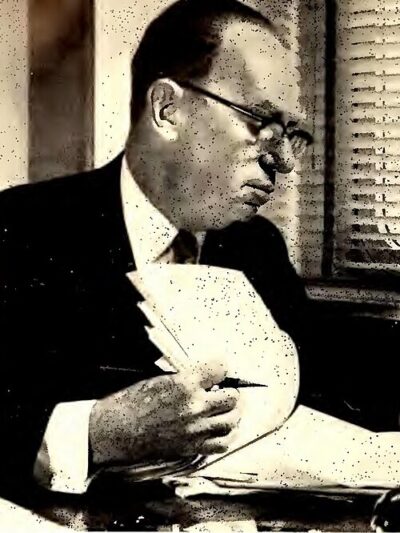
Leo Burnett
Leo Burnett was an American advertising executive. Born October 21, 1891, in St. Johns. Died June 7, 1971, in Lake Zurich. Educated at University of Michigan.
Facts
11 facts · 2 confirmed by two sources · 2 cited · 7 from one source
Where this comes from
Papalocal keeps its own record. It started from these sources; what each one said is kept here as it was copied, so a change on their side never changes this page by itself. Tap one to read its version.
What Wikidata says · copied November 15, 2026 · revision 2568434109
- Described as
- American advertising executive
- Born
- October 21, 1891 · 3 references
- Died
- June 7, 1971 · 3 references
- Born in
- St. Johns
- Died in
- Lake Zurich
- Buried in
- Rosehill Cemetery · 1 reference
- Citizen of
- United States
- Occupation
- journalist; advertising person · 1 reference; businessperson · 1 reference
- Education
- University of Michigan
- Children
- Phoebe Snetsinger
- Wikipedias with a page
- 26
Wikidata item Q326356 (wikidata.org/wiki/Q326356), public domain (CC0). Copied November 15, 2026.
What Wikipedia says · copied November 15, 2026 · revision 1372248283
Leo Burnett (October 21, 1891 – June 7, 1971) was an American advertising executive and the founder of Leo Burnett Company, Inc. He was responsible for creating some of advertising's best-known characters and campaigns of the 20th century, including Tony the Tiger, the Marlboro Man, the Maytag Repairman, United's "Fly the Friendly Skies", and Allstate's "Good Hands", and for garnering relationships with multinational clients such as McDonald's, Hallmark and Coca-Cola. In 1999, Burnett was named by Time as one of the 100 most influential people of the 20th century.
- Born, in its opening lines
- October 21, 1891
- Died, in its opening lines
- June 7, 1971
From the Wikipedia article “Leo Burnett” (en.wikipedia.org/wiki/Leo_Burnett), by its contributors, under CC BY-SA 4.0 (creativecommons.org/licenses/by-sa/4.0/). Copied November 15, 2026; not changed.
Confirmed Two sources agree. Cited One source, and it names where it got it. One source One source, without a reference of its own. Sources disagree The sources disagree. We show the best-supported value and keep theirs below.
