
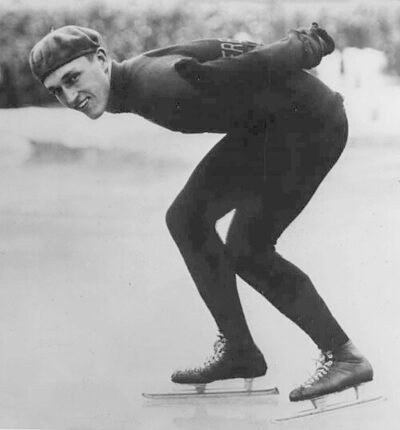
Leo Freisinger was a speed skater. Born February 7, 1916, in Chicago. Died August 29, 1985, in Mission Viejo. Educated at Carl Schurz High School.
Facts
8 facts · 2 confirmed by two sources · 4 cited · 2 from one source
Where this comes from
Papalocal keeps its own record. It started from these sources; what each one said is kept here as it was copied, so a change on their side never changes this page by itself. Tap one to read its version.
What Wikidata says · copied November 18, 2026 · revision 2554562181
- Described as
- speed skater
- Other names
- Leonhard Freisinger
- Born
- February 7, 1916 · 1 reference
- Died
- August 29, 1985
- Born in
- Chicago · 1 reference
- Died in
- Mission Viejo · 1 reference
- Citizen of
- United States
- Occupation
- speed skater · 2 references
- Education
- Carl Schurz High School
- Sport
- speed skating · 2 references
- Wikipedias with a page
- 14
Wikidata item Q6523744 (wikidata.org/wiki/Q6523744), public domain (CC0). Copied November 18, 2026.
What Wikipedia says · copied November 18, 2026 · revision 1366893061
Leonhard Freisinger (February 7, 1916 – August 29, 1985) was an American speed skater who competed at the 1936 Winter Olympics. He won a bronze medal in the 500 m and placed fourth in the 1500 m event. He won the U.S. National Indoor title in 1937 and 1938 and the National and North American Outdoor title in 1940. In 1938 he set a world record over 500 m at a meet in Davos, Switzerland, but Hans Engnestangen beat this record a few minutes later. Freisinger was selected for the 1940 Olympics, but they were canceled due to World War II. Later he became a figure skater in professional ice shows, and coached the 1964 American Olympic speed skating team.
- Born, in its opening lines
- February 7, 1916
- Died, in its opening lines
- August 29, 1985
From the Wikipedia article “Leo Freisinger” (en.wikipedia.org/wiki/Leo_Freisinger), by its contributors, under CC BY-SA 4.0 (creativecommons.org/licenses/by-sa/4.0/). Copied November 18, 2026; not changed.
Confirmed Two sources agree. Cited One source, and it names where it got it. One source One source, without a reference of its own. Sources disagree The sources disagree. We show the best-supported value and keep theirs below.
