
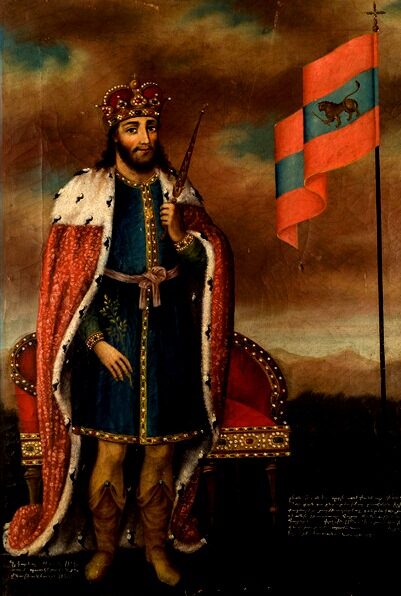
Leo I, King of Armenia was a first king of Cilician Armenia. Born 1150, in Armenian Kingdom of Cilicia. Died May 2, 1219, in Kozan. Positions held include king of Armenia.
Facts
14 facts · 2 confirmed by two sources · 1 cited · 11 from one source
Where this comes from
Papalocal keeps its own record. It started from these sources; what each one said is kept here as it was copied, so a change on their side never changes this page by itself. Tap one to read its version.
What Wikidata says · copied November 16, 2026 · revision 2553923526
- Described as
- first king of Cilician Armenia
- Other names
- Leo II, King of Armenia
- Born
- 1150
- Died
- May 2, 1219
- Born in
- Armenian Kingdom of Cilicia
- Died in
- Kozan
- Occupation
- sovereign
- Positions held
- king of Armenia
- Spouse
- Sibylla of Lusignan; Isabelle of Antioch, Queen of Armenia
- Children
- Stephanie of Armenia · 1 reference; Isabella I, Queen of Armenia
- Father
- Stephen of Armenia
- Mother
- Rita Paperontsi
- Siblings
- Ruben III, Prince of Armenia
- Religion
- Armenian Apostolic Church
- Wikipedias with a page
- 32
Wikidata item Q541848 (wikidata.org/wiki/Q541848), public domain (CC0). Copied November 16, 2026.
What Wikipedia says · copied November 16, 2026 · revision 1381269245
Leo I (Armenian: Լեւոն Ա Մեծագործ, romanized: Levon I. Metsagorts; 1150 – 2 May 1219) was the tenth lord of Armenian Cilicia, ruling from 1187 to 1219, and the first king to be crowned, in 1198/9 (sometimes known as Levon I the Magnificent). Leo eagerly led his kingdom alongside the armies of the Third Crusade and provided the crusaders with provisions, guides, pack animals and all manner of aid.
He was consecrated as king on 6 January 1199 or 1198
- Born, in its opening lines
- 1150
- Died, in its opening lines
- May 2, 1219
From the Wikipedia article “Leo I, King of Armenia” (en.wikipedia.org/wiki/Leo_I,_King_of_Armenia), by its contributors, under CC BY-SA 4.0 (creativecommons.org/licenses/by-sa/4.0/). Copied November 16, 2026; not changed.
Confirmed Two sources agree. Cited One source, and it names where it got it. One source One source, without a reference of its own. Sources disagree The sources disagree. We show the best-supported value and keep theirs below.
