
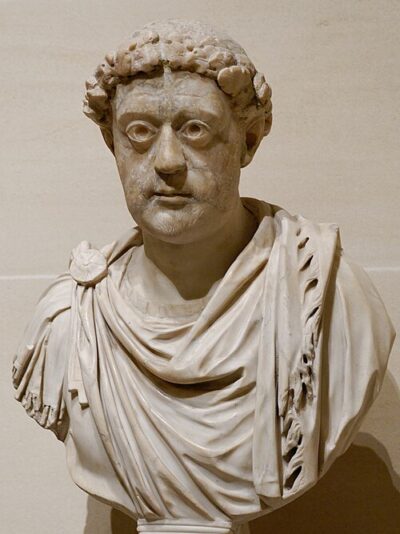
Leo I
Leo I was an Eastern Roman emperor from 457 to 474. Born 401, in Thrace. Died January 19, 474, in Constantinople. Positions held include ancient Roman senator and Byzantine emperor (457–474).
Facts
14 facts · 1 confirmed by two sources · 0 cited · 12 from one source · 1 where the sources disagree
What’s different
- Died: we show January 19, 474 (Sources disagree). Wikipedia says January 18, 474
Where this comes from
Papalocal keeps its own record. It started from these sources; what each one said is kept here as it was copied, so a change on their side never changes this page by itself. Tap one to read its version.
What Wikidata says · copied November 16, 2026 · revision 2521279229
- Described as
- Eastern Roman emperor from 457 to 474
- Other names
- Leo the Great, Leo the Butcher, Leo the Thracian
- Born
- 401 · 1 reference
- Died
- January 19, 474 · 1 reference
- Born in
- Thrace · 1 reference
- Died in
- Constantinople
- Cause of death
- dysentery
- Citizen of
- Byzantine Empire
- Occupation
- politician; military personnel
- Positions held
- ancient Roman senator; Byzantine emperor (457–474)
- Spouse
- Verina
- Children
- Ariadne; Leontia Porphyrogenita
- Religion
- Christianity
- Wikipedias with a page
- 60
Wikidata item Q183776 (wikidata.org/wiki/Q183776), public domain (CC0). Copied November 16, 2026.
What Wikipedia says · copied November 16, 2026 · revision 1382999179
Leo I (Latin: Leo; Ancient Greek: Λέων, romanized: Leōn; c. 401 – 18 January 474), also known as the Thracian (Latin: Thrax; Ancient Greek: ὁ Θρᾷξ, romanized: ō Thrâix), was Eastern Roman emperor from 457 to 474. He was a native of Dacia Aureliana near historic Thrace. He is sometimes surnamed with the epithet the Great (Latin: Magnus; Ancient Greek: ὁ Μέγας, romanized: ō Mégas), probably to distinguish him from his young grandson and co-augustus Leo II (Ancient Greek: ὁ Μικρός, romanized: ō Mikrós, lit. 'the Small').
During his 17-year rule, he oversaw a number of ambitious political and military plans, aimed mostly at aiding the faltering Western Roman Empire and recovering its former territories. He is notable for being the first Eastern Emperor to legislate in Koine Greek rather than Late Latin. He is commemorated as a saint in the Eastern Orthodox Church, with his feast day on 20 January.
- Born, in its opening lines
- c. 401
- Died, in its opening lines
- January 18, 474
From the Wikipedia article “Leo I (emperor)” (en.wikipedia.org/wiki/Leo_I_(emperor)), by its contributors, under CC BY-SA 4.0 (creativecommons.org/licenses/by-sa/4.0/). Copied November 16, 2026; not changed.
Confirmed Two sources agree. Cited One source, and it names where it got it. One source One source, without a reference of its own. Sources disagree The sources disagree. We show the best-supported value and keep theirs below.
