
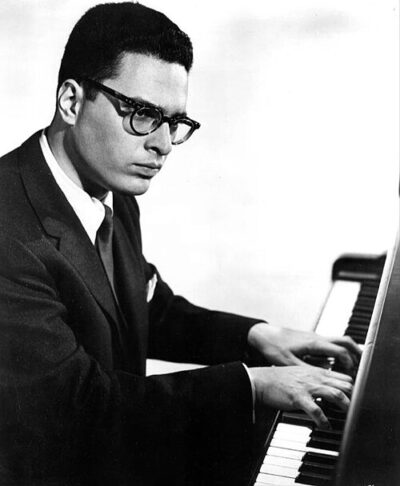
Leon Fleisher
Leon Fleisher was an American conductor and pianist. Born July 23, 1928, in San Francisco. Died August 2, 2020, in Baltimore. Awards include Kennedy Center Honors, Fellow of the American Academy of Arts and Sciences and Commandeur des Arts et des Lettres.
Facts
20 facts · 2 confirmed by two sources · 7 cited · 11 from one source
Where this comes from
Papalocal keeps its own record. It started from these sources; what each one said is kept here as it was copied, so a change on their side never changes this page by itself. Tap one to read its version.
What Wikidata says · copied November 16, 2026 · revision 2551026414
- Described as
- American conductor and pianist (1928–2020)
- Born
- July 23, 1928 · 5 references
- Died
- August 2, 2020 · 1 reference
- Born in
- San Francisco · 1 reference
- Died in
- Baltimore · 1 reference
- Cause of death
- cancer
- Citizen of
- United States
- Occupation
- conductor · 1 reference; classical pianist; musicologist; music educator · 1 reference; pianist · 2 references
- Member of
- American Academy of Arts and Sciences
- Genre
- classical music · 1 reference
- Instrument
- piano
- Awards
- Kennedy Center Honors; Fellow of the American Academy of Arts and Sciences; Commandeur des Arts et des Lettres (2006) · 1 reference
- Field
- music · 1 reference; music education · 1 reference
- Website
- http://www.leonfleisher.com/
- Wikipedias with a page
- 24
Wikidata item Q1356487 (wikidata.org/wiki/Q1356487), public domain (CC0). Copied November 16, 2026.
What Wikipedia says · copied November 16, 2026 · revision 1372331456
Leon Fleisher (July 23, 1928 – August 2, 2020) was an American classical pianist, conductor, and pedagogue. He was one of the most renowned pianists and pedagogues in the world. Music correspondent Elijah Ho called him "one of the most refined and transcendent musicians the United States has ever produced".
Born in San Francisco, Fleisher began playing piano at the age of four, and began studying with Artur Schnabel at age nine. He was particularly well known for his interpretations of the two piano concertos of Brahms and the five concertos of Beethoven, which he recorded with George Szell and the Cleveland Orchestra. With Szell, he also recorded concertos by Mozart, Grieg, Schumann, Franck, and Rachmaninoff.
In 1964, he lost the use of his right hand due to a neurological condition eventually diagnosed as focal dystonia, forcing him to focus on the repertoire for the left hand, such as Ravel's Piano Concerto for the Left Hand and many compositions written for him. In 2004, he played the world premiere of Paul Hindemith's Klaviermusik, a piano concerto for the left hand completed in 1923, with the Berlin Philharmonic. After being treated by neurologist Daniel B. Drachman, he regained some control of his right hand and played and recorded two-hand repertoire again.
He was also notable as a conductor, and especially as a teacher for over 60 years at the Peabody Institute at Johns Hopkins University, the Curtis Institute of Music and others. He was a Kennedy Center Honors awardee in 2007, among many distinctions.
- Born, in its opening lines
- July 23, 1928
- Died, in its opening lines
- August 2, 2020
From the Wikipedia article “Leon Fleisher” (en.wikipedia.org/wiki/Leon_Fleisher), by its contributors, under CC BY-SA 4.0 (creativecommons.org/licenses/by-sa/4.0/). Copied November 16, 2026; not changed.
Confirmed Two sources agree. Cited One source, and it names where it got it. One source One source, without a reference of its own. Sources disagree The sources disagree. We show the best-supported value and keep theirs below.
