
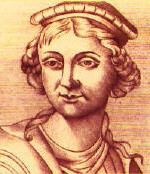
Leonor Teles de Menezes was a Portuguese queen. Born 1350, in Trás-os-Montes e Alto Douro. Died April 27, 1386, in Tordesillas. Positions held include regent and Queen Consort of Portugal.
Facts
21 facts · 0 confirmed by two sources · 3 cited · 18 from one source
Where this comes from
Papalocal keeps its own record. It started from these sources; what each one said is kept here as it was copied, so a change on their side never changes this page by itself. Tap one to read its version.
What Wikidata says · copied November 17, 2026 · revision 2527446076
- Described as
- Portuguese queen (1350-1386)
- Other names
- Leonor Teles
- Born
- 1350
- Died
- April 27, 1386
- Born in
- Trás-os-Montes e Alto Douro
- Died in
- Tordesillas
- Buried in
- Royal Convent of Santa Clara
- Citizen of
- Kingdom of Portugal
- Occupation
- monarch
- Positions held
- regent; Queen Consort of Portugal
- Spouse
- João Lourenço da Cunha; Ferdinand I of Portugal (1371–) · 1 reference
- Children
- Álvaro da Cunha, senhor de Pombeiro · 1 reference; Beatrice of Portugal; Afonso de Portugal
- Father
- Martim Afonso Telo de Meneses
- Mother
- Aldonca de Vasconcellos · 1 reference
- Siblings
- João Afonso Telo, Count of Barcelos; Gonçalo Telo de Menezes, Conde de Neiva e Faria, Senhor de Castanhede; Maria Telles de Meneses; Juana Téllez de Meneses
- Religion
- Christianity
- Wikipedias with a page
- 25
Wikidata item Q237747 (wikidata.org/wiki/Q237747), public domain (CC0). Copied November 17, 2026.
What Wikipedia says · copied November 17, 2026 · revision 1382250102
Leonor Teles (or Teles de Meneses; c. 1350 – c. 1405) was queen consort of Portugal by marriage to King Ferdinand I, and regent of Portugal. She was one of the protagonists, along with her brothers and her daughter Beatrice, of the events that led to the succession crisis of 1383–1385, which culminated in the defeat of her son-in-law King John I of Castile and his armies in the Battle of Aljubarrota. Called "the Treacherous" (a Aleivosa in Portuguese) by her subjects, who execrated her on account of her adultery and treason to her native country, she was dubbed by historian Alexandre Herculano as "the Portuguese Lucrezia Borgia".
From the Wikipedia article “Leonor Teles” (en.wikipedia.org/wiki/Leonor_Teles), by its contributors, under CC BY-SA 4.0 (creativecommons.org/licenses/by-sa/4.0/). Copied November 17, 2026; not changed.
Confirmed Two sources agree. Cited One source, and it names where it got it. One source One source, without a reference of its own. Sources disagree The sources disagree. We show the best-supported value and keep theirs below.
