
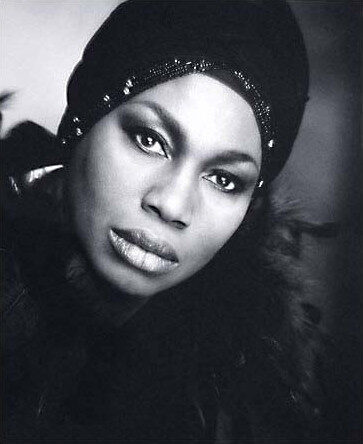
Leontyne Price
Leontyne Price is an African-American soprano. Born February 10, 1927, in Laurel. Educated at Juilliard School and Central State University. Awards include Spingarn Medal, National Medal of Arts and Grammy Lifetime Achievement Award.
Facts
23 facts · 1 confirmed by two sources · 7 cited · 15 from one source
Where this comes from
Papalocal keeps its own record. It started from these sources; what each one said is kept here as it was copied, so a change on their side never changes this page by itself. Tap one to read its version.
What Wikidata says · copied November 13, 2026 · revision 2568214694
- Described as
- African-American soprano
- Other names
- Mary Violet Leontyne Price, Mary Leontine Price
- Born
- February 10, 1927 · 9 references
- Born in
- Laurel · 2 references
- Name at birth
- Mary Violet Leontyne Price
- Citizen of
- United States
- Occupation
- opera singer · 1 reference
- Education
- Juilliard School; Central State University
- Member of
- American Academy of Arts and Sciences
- Genre
- opera; popular music
- Record label
- RCA Victor
- Awards
- Spingarn Medal (1965) · 1 reference; National Medal of Arts; Grammy Lifetime Achievement Award (1989); Gramophone Award for Lifetime Achievement (2003); Library of Congress Living Legend (2000–) · 1 reference; Presidential Medal of Freedom (1964) · 1 reference; Kennedy Center Honors; Primetime Emmy Award for Individual Performance in a Variety or Music Program; Grammy Awards; International Opera Award (2019) · 1 reference; honorary degree from Spelman College (1987) · 1 reference
- Spouse
- William Warfield (1952–1973) · 1 reference
- Wikipedias with a page
- 48
Wikidata item Q233718 (wikidata.org/wiki/Q233718), public domain (CC0). Copied November 13, 2026.
What Wikipedia says · copied November 13, 2026 · revision 1384716419
Leontyne Price ( LEE-ən-teen, lee-ON-teen; born Mary Violet Leontine Price, February 10, 1927) is an American singer who was the first African-American soprano to receive international acclaim. From 1961 she began a long association with the Metropolitan Opera, becoming the first Black singer to maintain a sustained relationship with the company. She regularly appeared at the world's major opera houses, including the Vienna State Opera, the Royal Opera House, San Francisco Opera, Lyric Opera of Chicago, and La Scala. She was particularly renowned for her performances of the title role in Giuseppe Verdi's Aida.
Born in Laurel, Mississippi, Price studied at Wilberforce University and the Juilliard School with Florence Kimball. Price's first significant professional engagement was in Virgil Thomson's Four Saints in Three Acts which she performed both on Broadway and in Paris. Later that same year she starred in the third revival of George Gershwin's Porgy and Bess, and would marry her co-star, bass-baritone William Warfield. She began a long association with composer Samuel Barber in 1953 when she performed the world premiere of his Hermit Songs with the composer as her accompanist at the Library of Congress.
In 1955 Price became the first African American to star in a televised opera when she portrayed the title role in Puccini's Tosca with the NBC Opera Theatre. This event was widely viewed as a significant moment in breaking the color barrier for black opera singers who were historically barred from appearing on the opera stage. This televised performance, along with appearances at the San Francisco Opera as Poulenc's Dialogues des Carmélites and Aida, brought her to international attention. She went on to sing at many of the world's major opera houses with Aida, before her successful debut at the Metropolitan Opera (Met) in 1961, as Leonora in Verdi's Il trovatore. Continuing her career there, she starred in a multitude of operas for 20 years, securing her place among the leading performers of the century. One of these works was Barber's Antony and Cleopatra, which she starred in for its world premiere. She made her farewell opera performance at the Met in 1985 in Aida.
In interviews, Price referred to her own voice as that of a lyric soprano, although scholars have variously described her as a dramatic or spinto soprano instead. Price's musical interpretations were subtle and often overshadowed her acting. She was noted for her roles in operas by Mozart and Puccini, as well as playing Cleopatra in Handel's Giulio Cesare and Poppea in Monteverdi's L'incoronazione di Poppea. However, the "middle period" operas of Verdi remain her greatest triumph: Aida, the Leonoras of Il trovatore and La forza del destino, as well as Amelia in Un ballo in maschera. Her performances in these works, as well as Mozart and Puccini's operas, survive in her many recordings.
After her retirement from opera, Price continued to appear in recitals and orchestral concerts until 1998. After that, she would come out of retirement to sing at special events, including a memorial concert at Carnegie Hall, in 2001 for victims of the 9/11 terrorist attacks. Among her many honors and awards are the Presidential Medal of Freedom in 1964, in addition to her 13 Grammy Awards.
- Born, in its opening lines
- February 10, 1927
From the Wikipedia article “Leontyne Price” (en.wikipedia.org/wiki/Leontyne_Price), by its contributors, under CC BY-SA 4.0 (creativecommons.org/licenses/by-sa/4.0/). Copied November 13, 2026; not changed.
Confirmed Two sources agree. Cited One source, and it names where it got it. One source One source, without a reference of its own. Sources disagree The sources disagree. We show the best-supported value and keep theirs below.
