
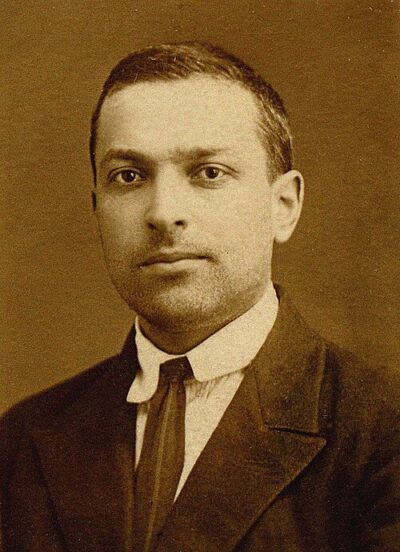
Lev Vygotsky
Lev Vygotsky was a Soviet psychologist. Born November 17, 1896, in Vorsha. Died June 10, 1934, in Moscow. Educated at Lomonosov Moscow State University and Moscow City People’s University.
Facts
27 facts · 1 confirmed by two sources · 3 cited · 22 from one source · 1 where the sources disagree
What’s different
- Died: we show June 10, 1934 (Sources disagree). Wikipedia says June 11, 1934
Where this comes from
Papalocal keeps its own record. It started from these sources; what each one said is kept here as it was copied, so a change on their side never changes this page by itself. Tap one to read its version.
What Wikidata says · copied November 16, 2026 · revision 2568269901
- Described as
- Soviet psychologist (1896-1934)
- Other names
- Lev Semyonovich Vigotsky
- Born
- November 17, 1896 · 3 references
- Died
- June 10, 1934 · 3 references
- Born in
- Vorsha · 1 reference
- Died in
- Moscow · 1 reference
- Buried in
- Novodevichy Cemetery
- Cause of death
- tuberculosis
- Name at birth
- Лев Симхович Выгодский
- Citizen of
- Russian Empire; Soviet Union
- Occupation
- philosopher; psychologist · 1 reference; pedagogue; non-fiction writer; university teacher; anthropologist · 1 reference
- Worked for
- Psychological Institute of the Russian Academy of Education; Institute of Correctional Pedagogy; Krupskaya Academy of Communist Education · 1 reference; Second Moscow State University · 1 reference; Lomonosov Moscow State University · 1 reference
- Education
- Lomonosov Moscow State University; Moscow City People’s University
- Field
- psychology; defectology; paedology; literary studies
- Spouse
- Roza Noevna Vygodskaya
- Wikipedias with a page
- 82
Wikidata item Q180819 (wikidata.org/wiki/Q180819), public domain (CC0). Copied November 16, 2026.
What Wikipedia says · copied November 16, 2026 · revision 1381897075
Lev Semyonovich Vygotsky (Russian: Лев Семёнович Выготский, IPA: [vɨˈɡotskʲɪj]; Belarusian: Леў Сямёнавіч Выгоцкі; 17 November [O.S. 5 November] 1896 – June 11, 1934) was a Russian and Soviet psychologist, best known for his work on psychological development in children and creating the framework known as cultural-historical activity theory. After his early death, his books and research were banned in the Soviet Union until Joseph Stalin's death in 1953, with a first collection of major texts published in 1956. A Review of General Psychology survey, published in 2002, ranked Vygotsky as the 83rd most cited psychologist of the 20th century.
His major ideas include:The social origin of mind: Vygotsky believed that human mental and cognitive abilities are not biologically determined, but instead created and shaped by use of language and tools in the process of interacting and constructing the cultural and social environment.
The importance of mediation: He saw mediation as the key to human development, because it leads to the use of cultural tools and becomes a pathway for psychological development through the process of interiorization.
The zone of proximal development: Vygotsky introduced the concept, which refers to the gap between a child's current level of development and the level they are capable of reaching with tools provided by others with more knowledge.
The significance of play: Vygotsky viewed play as a crucial aspect of children's development, as he thought of it as the best sandbox to build and develop the practice of mediation.
- Born, in its opening lines
- November 17, 1896
- Died, in its opening lines
- June 11, 1934
From the Wikipedia article “Lev Vygotsky” (en.wikipedia.org/wiki/Lev_Vygotsky), by its contributors, under CC BY-SA 4.0 (creativecommons.org/licenses/by-sa/4.0/). Copied November 16, 2026; not changed.
Confirmed Two sources agree. Cited One source, and it names where it got it. One source One source, without a reference of its own. Sources disagree The sources disagree. We show the best-supported value and keep theirs below.
