
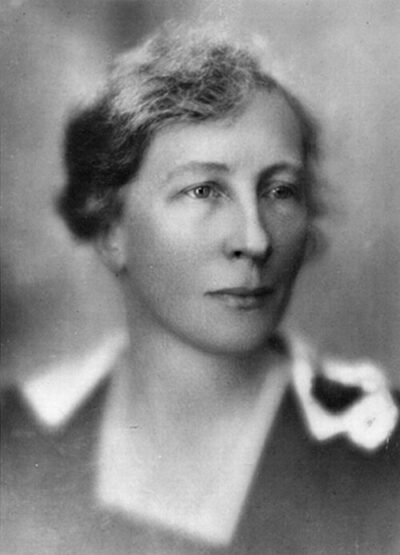
Lillian Moller Gilbreth
Lillian Moller Gilbreth was an American psychologist and industrial engineer. Born May 24, 1878, in Oakland. Died January 2, 1972, in Phoenix. Known for Fatigue study, the elimination of humanity's greatest unnecessary waste. Educated at University of California, Berkeley and Brown University. Awards include National Women's Hall of Fame, Hoover Medal and Henry Laurence Gantt Medal.
Facts
33 facts · 2 confirmed by two sources · 16 cited · 15 from one source
Where this comes from
Papalocal keeps its own record. It started from these sources; what each one said is kept here as it was copied, so a change on their side never changes this page by itself. Tap one to read its version.
What Wikipedia says · copied November 14, 2026 · revision 1383830096
Lillian Evelyn Gilbreth (née Moller; May 24, 1878 – January 2, 1972) was an American psychologist, industrial engineer, consultant, and educator who was an early pioneer in applying psychology to time-and-motion studies. She was described in the 1940s as "a genius in the art of living."
Gilbreth, one of the first female engineers to earn a Ph.D., is considered to be the first industrial/organizational psychologist. She and her husband, Frank Bunker Gilbreth, were efficiency experts who contributed to the study of industrial engineering, especially in the areas of motion study and human factors.
Cheaper by the Dozen (1948) and Belles on Their Toes (1950), written by two of their children (Ernestine and Frank Jr.) tell the story of their family life and describe how time-and-motion studies were applied to the organization and daily activities of their large family. Both books were later made into feature films.
- Born, in its opening lines
- May 24, 1878
- Died, in its opening lines
- January 2, 1972
From the Wikipedia article “Lillian Moller Gilbreth” (en.wikipedia.org/wiki/Lillian_Moller_Gilbreth), by its contributors, under CC BY-SA 4.0 (creativecommons.org/licenses/by-sa/4.0/). Copied November 14, 2026; not changed.
What Wikidata says · copied November 14, 2026 · revision 2568990296
- Described as
- American psychologist and industrial engineer (1878–1972)
- Other names
- Lillian Evelyn Moller Gilbreth, Lillian Moller Gilbraith, Lillian Gilbraith, Lillian Evelyn Gilbreth
- Born
- May 24, 1878 · 7 references
- Died
- January 2, 1972 · 6 references
- Born in
- Oakland · 2 references
- Died in
- Phoenix · 1 reference
- Name at birth
- Lillie Evelyn Moller · 1 reference
- Citizen of
- United States
- Occupation
- industrial engineer · 1 reference; psychologist · 2 references; teacher; photographer; writer · 2 references; businessperson · 1 reference; inventor · 1 reference; mechanical engineer · 1 reference
- Worked for
- University of Wisconsin–Madison; Purdue University · 1 reference
- Education
- University of California, Berkeley · 1 reference; Brown University (–1915) · 2 references; Oakland High School · 1 reference
- Member of
- Women's Engineering Society; Graduate Women in Science
- Known for
- Fatigue study, the elimination of humanity's greatest unnecessary waste
- Awards
- National Women's Hall of Fame (1995) · 1 reference; Hoover Medal (1966); Henry Laurence Gantt Medal (1944); Washington Award (1954) · 1 reference
- Field
- scientific management; psychology · 1 reference; literature · 1 reference
- Spouse
- Frank Bunker Gilbreth · 1 reference
- Children
- Frank Bunker Gilbreth, Jr. · 1 reference; Ernestine Gilbreth Carey; Robert Moller Gilbreth · 1 reference
- Wikipedias with a page
- 40
Wikidata item Q40197 (wikidata.org/wiki/Q40197), public domain (CC0). Copied November 14, 2026.
Confirmed Two sources agree. Cited One source, and it names where it got it. One source One source, without a reference of its own. Sources disagree The sources disagree. We show the best-supported value and keep theirs below.
