
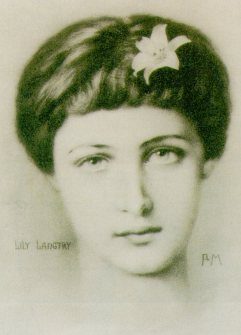
Lillie Langtry
Lillie Langtry was a British actress. Born October 13, 1853, in Saint Saviour. Died February 12, 1929, in Monte Carlo.
Facts
17 facts · 2 confirmed by two sources · 5 cited · 10 from one source
Where this comes from
Papalocal keeps its own record. It started from these sources; what each one said is kept here as it was copied, so a change on their side never changes this page by itself. Tap one to read its version.
What Wikidata says · copied November 18, 2026 · revision 2570128815
- Described as
- British actress (1853-1929)
- Other names
- Emilie Charlotte Le Breton De Bathe, Emilie Charlotte Le Breton, Jersey Lily, Mrs. Langtry, Emily Charlotte le Breton, Emilie Charlotte Le Breton Langtry, Jersey Lilly, Lily Langtry, Emilie Charlotte Langtry, Lilly Langtry
- Born
- October 13, 1853 · 12 references
- Died
- February 12, 1929 · 12 references
- Born in
- Saint Saviour
- Died in
- Monte Carlo
- Buried in
- St Saviour Churchyard · 1 reference
- Cause of death
- pneumonia
- Name at birth
- Emilie Charlotte Le Breton
- Citizen of
- United Kingdom
- Occupation
- courtesan; stage actor; theatre manager · 1 reference; actor · 1 reference
- Spouse
- Edward Langtry (1874–) · 1 reference; Sir Hugo Gerald de Bathe, 5th Bt. (1899–) · 1 reference
- Children
- Jeanne Marie Langtry
- Father
- William Corbet Le Breton · 2 references
- Mother
- Emilie Charlotte Martin · 1 reference
- Wikipedias with a page
- 25
Wikidata item Q297743 (wikidata.org/wiki/Q297743), public domain (CC0). Copied November 18, 2026.
What Wikipedia says · copied November 18, 2026 · revision 1380411461
Emilie Charlotte, Lady de Bathe (née Le Breton, formerly Langtry; 13 October 1853 – 12 February 1929), known as Lillie (or Lily) Langtry and nicknamed "The Jersey Lily," was a British socialite, stage actress and producer.
Born and raised on the island of Jersey, she moved to London in 1876, two years after marrying. Her looks and personality attracted interest, commentary, and invitations from artists and society hostesses, and she was celebrated as a young woman of great beauty and charm. During the aesthetic movement in England, she was painted by aesthete artists. In 1882, she became the poster-girl for Pears soap, and thus the first celebrity to endorse a commercial product.
In 1881, Langtry became an actress and made her West End debut in the comedy She Stoops to Conquer, causing a sensation in London by becoming the first socialite to appear on stage. She starred in many plays in both the United Kingdom and the United States, including The Lady of Lyons, and Shakespeare's As You Like It. Eventually she ran her own stage production company. In later life she performed "dramatic sketches" in vaudeville. From the mid-1890s until 1919, Langtry lived at Regal Lodge at Newmarket in Suffolk, England, where she maintained a successful horse racing stable. The Lillie Langtry Stakes horse race is named after her.
Considered one of the most glamorous British women of her era, Langtry was the subject of widespread public and media interest. Her acquaintances in London included Oscar Wilde, who encouraged Langtry to pursue acting. She was known for her relationships with royal figures and noblemen, including Albert Edward, Prince of Wales (the future King Edward VII), Lord Shrewsbury, and Prince Louis of Battenberg.
Langtry remains a somewhat enigmatic personality despite having lived a public life as a ‘professional beauty’, royal mistress, actress, and racehorse owner. Opinions about her are contradictory. To some, she was simply calculating and cold-hearted, while to others she appeared charming and open.
- Born, in its opening lines
- October 13, 1853
- Died, in its opening lines
- February 12, 1929
From the Wikipedia article “Lillie Langtry” (en.wikipedia.org/wiki/Lillie_Langtry), by its contributors, under CC BY-SA 4.0 (creativecommons.org/licenses/by-sa/4.0/). Copied November 18, 2026; not changed.
Confirmed Two sources agree. Cited One source, and it names where it got it. One source One source, without a reference of its own. Sources disagree The sources disagree. We show the best-supported value and keep theirs below.
