
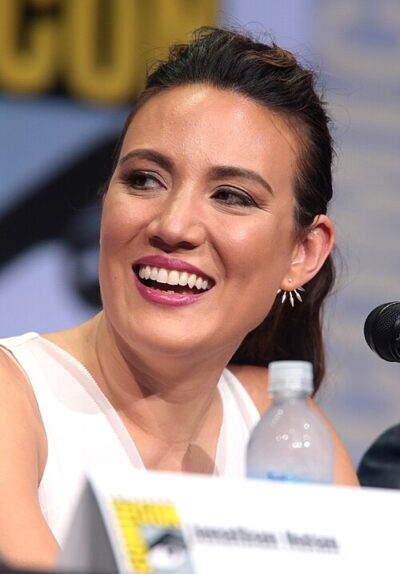
Lisa Joy
Lisa Joy is an American screenwriter and executive producer. Born May 10, 1972, in New Jersey. Educated at Harvard Law School and Stanford University.
Facts
12 facts · 0 confirmed by two sources · 2 cited · 9 from one source · 1 where the sources disagree
What’s different
- Born: we show May 10, 1972 (Sources disagree). Wikipedia says May 23, 1977
Where this comes from
Papalocal keeps its own record. It started from these sources; what each one said is kept here as it was copied, so a change on their side never changes this page by itself. Tap one to read its version.
What Wikidata says · copied November 16, 2026 · revision 2553393779
- Described as
- American screenwriter and executive producer
- Other names
- Lisa Joy Nolan
- Born
- May 10, 1972
- Born in
- New Jersey
- Citizen of
- United States
- Occupation
- screenwriter · 1 reference; executive producer; film director; showrunner; television producer; director · 1 reference
- Education
- Harvard Law School; Stanford University
- Spouse
- Jonathan Nolan (2009–)
- Wikipedias with a page
- 20
Wikidata item Q27663202 (wikidata.org/wiki/Q27663202), public domain (CC0). Copied November 16, 2026.
What Wikipedia says · copied November 16, 2026 · revision 1383745525
Lisa Joy (born May 23, 1977) is an American screenwriter, director, producer, and lawyer. She is best known as the co-creator, writer, director, and executive producer of the HBO science-fiction drama series Westworld (2016–2022). For her work on the series, she received multiple Primetime Emmy Award nominations. Joy's other work includes the ABC comedy series Pushing Daisies (2007–2009) and the USA Network crime drama series Burn Notice (2009–2011). In 2021, she made her feature film directorial debut with Reminiscence.
- Born, in its opening lines
- May 23, 1977
From the Wikipedia article “Lisa Joy” (en.wikipedia.org/wiki/Lisa_Joy), by its contributors, under CC BY-SA 4.0 (creativecommons.org/licenses/by-sa/4.0/). Copied November 16, 2026; not changed.
Confirmed Two sources agree. Cited One source, and it names where it got it. One source One source, without a reference of its own. Sources disagree The sources disagree. We show the best-supported value and keep theirs below.
