
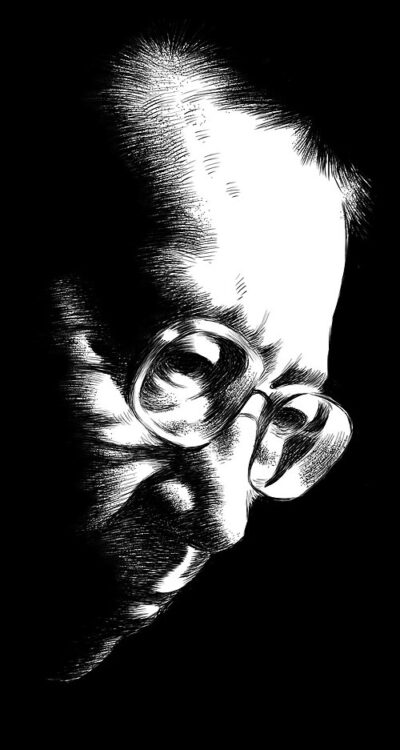
Liu Xiaobo
Liu Xiaobo was a Chinese literary critic, writer, professor, and human rights activist. Born December 28, 1955, in Changchun. Died July 13, 2017, in First Affiliated Hospital, China Medical University. Positions held include president (2003–2007). Educated at Jilin University and Beijing Normal University (2 times). Awards include Nobel Peace Prize, Hermann Kesten Prize and Homo Homini Award.
Facts
29 facts · 2 confirmed by two sources · 15 cited · 12 from one source
Where this comes from
Papalocal keeps its own record. It started from these sources; what each one said is kept here as it was copied, so a change on their side never changes this page by itself. Tap one to read its version.
What Wikidata says · copied November 16, 2026 · revision 2565555581
- Described as
- Chinese literary critic, writer, professor, and human rights activist (1955–2017)
- Other names
- Liú Xiǎobō, Liu Xiao Bo, Xiaobo Liu
- Born
- December 28, 1955 · 8 references
- Died
- July 13, 2017 · 8 references
- Born in
- Changchun · 1 reference
- Died in
- First Affiliated Hospital, China Medical University
- Cause of death
- cancer · 1 reference
- Citizen of
- People's Republic of China
- Occupation
- poet · 1 reference; writer · 2 references; human rights defender; literary critic; literary scholar · 1 reference; freedom fighter · 1 reference
- Positions held
- president (2003–2007)
- Worked for
- Columbia University; Johns Hopkins University · 1 reference
- Education
- Jilin University (1977–1982); Beijing Normal University (2 times) (1982–1988); High School Attached to Northeast Normal University
- Awards
- Nobel Peace Prize (2010) · 2 references; Hermann Kesten Prize (2010) · 1 reference; Homo Homini Award (2008) · 1 reference; One Humanity Award (2012) · 1 reference; Giuseppe Motta Medal (2010); PEN Barbara Goldsmith Freedom to Write Award (2009) · 1 reference; Fondation de France Prize for press freedom defender (2004) · 1 reference; Human Rights Press Award (2004) · 3 references
- Field
- literary criticism · 1 reference
- Spouse
- Liu Xia (1997–2017) · 2 references
- Religion
- atheism
- Wikipedias with a page
- 117
Wikidata item Q41617 (wikidata.org/wiki/Q41617), public domain (CC0). Copied November 16, 2026.
What Wikipedia says · copied November 16, 2026 · revision 1385360929
Liu Xiaobo (Chinese: 刘晓波; pinyin: Liú Xiǎobō; 28 December 1955 – 13 July 2017) was a Chinese literary critic, human rights activist, philosopher and Nobel Peace Prize laureate who called for political reforms and was involved in campaigns to end Chinese Communist Party one-party rule in China. He was arrested numerous times, and was described as China's most prominent dissident and the country's most famous political prisoner. On 26 June 2017, he was granted medical parole after being diagnosed with liver cancer; he died a few weeks later on 13 July 2017.
Liu rose to fame in 1980s Chinese literary circles with his literary critiques. He eventually became a visiting scholar at several international universities. He returned to China to support the 1989 Tiananmen Square protests and was imprisoned for the first time from 1989 to 1991, again from 1995 to 1996 and yet again from 1996 to 1999 for his involvement on suspicion of inciting subversion of state power. He served as the President of the Independent Chinese PEN Center, from 2003 to 2007. He was also the president of Minzhu Zhongguo (Democratic China) magazine starting in the mid-1990s. On 8 December 2008, Liu was detained due to his participation with the Charter 08 manifesto. He was formally arrested on 23 June 2009 on suspicion of "inciting subversion of state power". He was tried on the same charges on 23 December 2009 and sentenced to eleven years' imprisonment and two years' deprivation of political rights on 25 December 2009.
During his fourth prison term, Liu was awarded the 2010 Nobel Peace Prize for "his long and non-violent struggle for fundamental human rights in China." Liu was the first ethnically Chinese person of any citizenship to be awarded the peace prize as well as the first Chinese citizen to be awarded a Nobel Prize of any kind while residing in China. He was the third person to have been awarded the Nobel Peace Prize while in prison or detention, after Germany's Carl von Ossietzky (1935) and Burma's Aung San Suu Kyi (1991).
- Born, in its opening lines
- December 28, 1955
- Died, in its opening lines
- July 13, 2017
From the Wikipedia article “Liu Xiaobo” (en.wikipedia.org/wiki/Liu_Xiaobo), by its contributors, under CC BY-SA 4.0 (creativecommons.org/licenses/by-sa/4.0/). Copied November 16, 2026; not changed.
Confirmed Two sources agree. Cited One source, and it names where it got it. One source One source, without a reference of its own. Sources disagree The sources disagree. We show the best-supported value and keep theirs below.
