
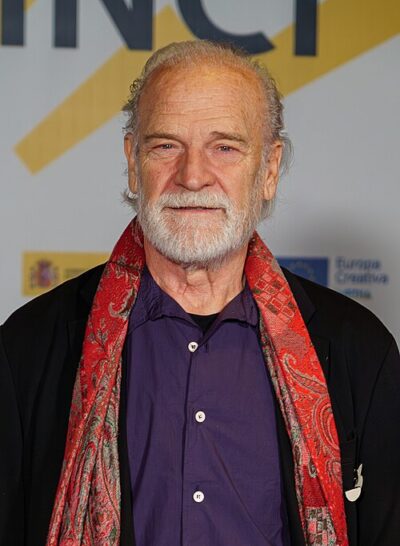
Lluís Homar
Lluís Homar is a Spanish actor and theater director. Born April 20, 1957, in Barcelona. Positions held include theatre manager (1992–2000). Educated at University of Barcelona and Autonomous University of Barcelona. Awards include Gaudí Award for Best Actor in a Supporting Role, Premi Nacional de Teatre and Goya Award for Best Supporting Actor.
Facts
13 facts · 1 confirmed by two sources · 3 cited · 9 from one source
Where this comes from
Papalocal keeps its own record. It started from these sources; what each one said is kept here as it was copied, so a change on their side never changes this page by itself. Tap one to read its version.
What Wikidata says · copied November 18, 2026 · revision 2566866273
- Described as
- Spanish actor and theater director
- Other names
- Lluis Homar
- Born
- April 20, 1957
- Born in
- Barcelona · 1 reference
- Citizen of
- Spain
- Occupation
- actor · 2 references; theatre director · 1 reference; theatre manager
- Positions held
- theatre manager (1992–2000)
- Worked for
- Teatre Lliure
- Education
- University of Barcelona; Autonomous University of Barcelona · 1 reference
- Awards
- Gaudí Award for Best Actor in a Supporting Role (2011); Premi Nacional de Teatre (2006); Goya Award for Best Supporting Actor (2012)
- Wikipedias with a page
- 20
Wikidata item Q779875 (wikidata.org/wiki/Q779875), public domain (CC0). Copied November 18, 2026.
What Wikipedia says · copied November 18, 2026 · revision 1354340955
Lluís Homar i Toboso (born 20 April 1957) is a Spanish actor and theater director from Barcelona. He is best known for his roles in Pedro Almodóvar's Bad Education (2004) and Broken Embraces (2009), in Emilio Aragón's Paper Birds (2010), and for his portrayal of the robot Max in Kike Maíllo's film Eva (2011).
- Born, in its opening lines
- April 20, 1957
From the Wikipedia article “Lluís Homar” (en.wikipedia.org/wiki/Lluís_Homar), by its contributors, under CC BY-SA 4.0 (creativecommons.org/licenses/by-sa/4.0/). Copied November 18, 2026; not changed.
Confirmed Two sources agree. Cited One source, and it names where it got it. One source One source, without a reference of its own. Sources disagree The sources disagree. We show the best-supported value and keep theirs below.
