
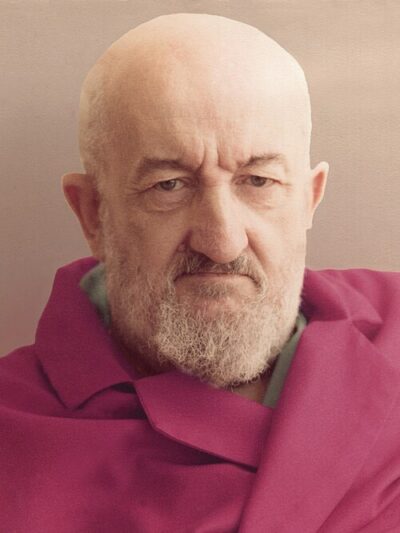
Lobsang Rampa
Lobsang Rampa was an English writer. Born April 8, 1910, in Plympton. Died January 25, 1981, in Calgary. Known for The Third Eye.
Facts
9 facts · 2 confirmed by two sources · 0 cited · 7 from one source
Where this comes from
Papalocal keeps its own record. It started from these sources; what each one said is kept here as it was copied, so a change on their side never changes this page by itself. Tap one to read its version.
What Wikidata says · copied November 17, 2026 · revision 2565897551
- Described as
- English writer (1910-1981)
- Other names
- Tuesday Lobsang Rampa, Cyril Henry Hoskin
- Born
- April 8, 1910 · 2 references
- Died
- January 25, 1981 · 3 references
- Born in
- Plympton
- Died in
- Calgary
- Name at birth
- Cyril Henry Hoskin
- Citizen of
- United Kingdom; United Kingdom of Great Britain and Ireland (–1927)
- Occupation
- writer
- Known for
- The Third Eye
- Wikipedias with a page
- 26
Wikidata item Q454042 (wikidata.org/wiki/Q454042), public domain (CC0). Copied November 17, 2026.
What Wikipedia says · copied November 17, 2026 · revision 1377986099
Lobsang Rampa was the pen name of Cyril Henry Hoskin (8 April 1910 – 25 January 1981), an English author who wrote books with paranormal and occult themes. His best known work is The Third Eye, published in Britain in 1956.
Following the publication of the book, newspapers reported that Rampa had been born Cyril Henry Hoskin, and was a surgical fitter, the son of a plumber from Plympton in Devon, who claimed that his body hosted the spirit of a Tibetan lama going by the name of Tuesday Lobsang Rampa, who is purported to have authored the books. The name Tuesday relates to a claim in The Third Eye that Tibetans are named after the day of the week on which they were born.
- Born, in its opening lines
- April 8, 1910
- Died, in its opening lines
- January 25, 1981
From the Wikipedia article “Lobsang Rampa” (en.wikipedia.org/wiki/Lobsang_Rampa), by its contributors, under CC BY-SA 4.0 (creativecommons.org/licenses/by-sa/4.0/). Copied November 17, 2026; not changed.
Confirmed Two sources agree. Cited One source, and it names where it got it. One source One source, without a reference of its own. Sources disagree The sources disagree. We show the best-supported value and keep theirs below.
