
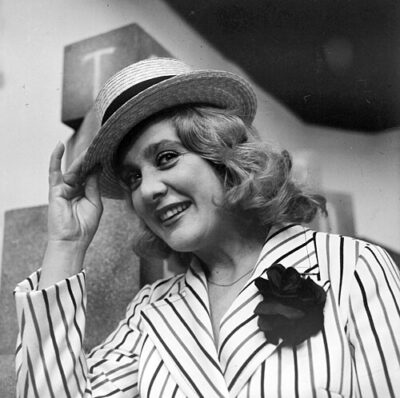
Lola Novaković
Lola Novaković was a Serbian singer. Born April 25, 1935, in Belgrade. Died April 3, 2016, in Belgrade.
Facts
17 facts · 2 confirmed by two sources · 0 cited · 15 from one source
Where this comes from
Papalocal keeps its own record. It started from these sources; what each one said is kept here as it was copied, so a change on their side never changes this page by itself. Tap one to read its version.
What Wikidata says · copied November 16, 2026 · revision 2549307771
- Described as
- Serbian singer (1935-2016)
- Other names
- Lola Jovanović, Lola Novakovic
- Born
- April 25, 1935
- Died
- April 3, 2016 · 2 references
- Born in
- Belgrade
- Died in
- Belgrade
- Name at birth
- Зорана Новаковић
- Citizen of
- Serbia; Socialist Federal Republic of Yugoslavia; Federal Republic of Yugoslavia; Serbia and Montenegro
- Occupation
- singer; actor; film actor; television actor
- Genre
- pop music · 1 reference
- Instrument
- voice
- Record label
- Jugoton; PGP-RTB
- Wikipedias with a page
- 30
Wikidata item Q452792 (wikidata.org/wiki/Q452792), public domain (CC0). Copied November 16, 2026.
What Wikipedia says · copied November 16, 2026 · revision 1353154660
Zorana "Lola" Novaković (Serbian Cyrillic: Зоранa "Лола" Новаковић); (25 April 1935 – 3 April 2016) was a Serbian singer, hugely popular during the 1960s and to a lesser degree the 1970s. She was born in Belgrade, Kingdom of Yugoslavia. She represented Yugoslavia at the Eurovision Song Contest 1962, where she finished fourth.
In 1962, she starred in Šeki snima, pazi se, a full-length comedy inspired by the public persona of football sensation Dragoslav Šekularac.
She died on 3 April 2016, at age 80.
- Born, in its opening lines
- April 25, 1935
- Died, in its opening lines
- April 3, 2016
From the Wikipedia article “Lola Novaković” (en.wikipedia.org/wiki/Lola_Novaković), by its contributors, under CC BY-SA 4.0 (creativecommons.org/licenses/by-sa/4.0/). Copied November 16, 2026; not changed.
Confirmed Two sources agree. Cited One source, and it names where it got it. One source One source, without a reference of its own. Sources disagree The sources disagree. We show the best-supported value and keep theirs below.
