
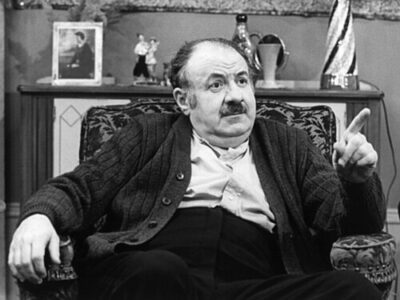
Lou Jacobi was an actor. Born December 28, 1913, in Toronto. Died October 23, 2009, in Manhattan. Awards include Canada's Walk of Fame.
Facts
11 facts · 2 confirmed by two sources · 4 cited · 5 from one source
Where this comes from
Papalocal keeps its own record. It started from these sources; what each one said is kept here as it was copied, so a change on their side never changes this page by itself. Tap one to read its version.
What Wikidata says · copied November 18, 2026 · revision 2561755056
- Described as
- actor (1913-2009)
- Other names
- Louis Harold Jacobovitch
- Born
- December 28, 1913 · 5 references
- Died
- October 23, 2009 · 6 references
- Born in
- Toronto · 1 reference
- Died in
- Manhattan · 1 reference
- Buried in
- Beth-El Cemetery · 1 reference
- Citizen of
- Canada
- Occupation
- stage actor; film actor; television actor; actor · 2 references
- Awards
- Canada's Walk of Fame (1999) · 1 reference
- Wikipedias with a page
- 17
Wikidata item Q1871315 (wikidata.org/wiki/Q1871315), public domain (CC0). Copied November 18, 2026.
What Wikipedia says · copied November 18, 2026 · revision 1385306456
Lou Jacobi (born Louis Harold Jacobovitch; 28 December 1913 – 23 October 2009) was a Canadian actor and comedian, known for his many character roles.
He came to prominence for his role as Mr. Van Daan in the 1955 Broadway production of The Diary of Anne Frank which he reprised in the 1959 film version. He also acted in the films Irma la Douce (1963), Little Murders (1971), Everything You Always Wanted to Know About Sex* (*But Were Afraid to Ask) (1972), Next Stop, Greenwich Village (1976), The Lucky Star (1980), Arthur (1981), My Favorite Year (1982), and Avalon (1990).
- Born, in its opening lines
- December 28, 1913
- Died, in its opening lines
- October 23, 2009
From the Wikipedia article “Lou Jacobi” (en.wikipedia.org/wiki/Lou_Jacobi), by its contributors, under CC BY-SA 4.0 (creativecommons.org/licenses/by-sa/4.0/). Copied November 18, 2026; not changed.
Confirmed Two sources agree. Cited One source, and it names where it got it. One source One source, without a reference of its own. Sources disagree The sources disagree. We show the best-supported value and keep theirs below.
