
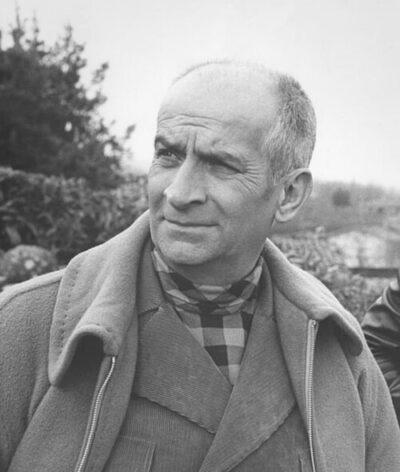
Louis de Funès
Louis de Funès was a French actor and comedian. Born July 31, 1914, in Courbevoie. Died January 27, 1983, in Nantes. Educated at Lycée Condorcet and Cours Simon. Awards include Knight of the Legion of Honour and César Award.
Facts
28 facts · 2 confirmed by two sources · 7 cited · 18 from one source · 1 where the sources disagree
What’s different
- Name at birth: we show Louis Germain David de Funès de Galarra (Sources disagree). Wikidata also lists Louis Germain David de Funès de Galarza y Soto
Where this comes from
Papalocal keeps its own record. It started from these sources; what each one said is kept here as it was copied, so a change on their side never changes this page by itself. Tap one to read its version.
What Wikidata says · copied November 16, 2026 · revision 2568844862
- Described as
- French actor and comedian (1914–1983)
- Other names
- Louis Germain David de Funès de Galarza, Louis de Funes, Louis Germain David de Funes de Galarza
- Born
- July 31, 1914 · 11 references
- Died
- January 27, 1983 · 11 references
- Born in
- Courbevoie · 2 references
- Died in
- Nantes · 2 references
- Buried in
- Le Cellier
- Cause of death
- myocardial infarction
- Name at birth
- Louis Germain David de Funès de Galarra · 1 reference; Louis Germain David de Funès de Galarza y Soto
- Citizen of
- France
- Occupation
- comedian; film actor · 1 reference; film director; film producer; dub actor; screenwriter; stage actor; pianist
- Education
- Lycée Condorcet; Cours Simon
- Instrument
- piano
- Awards
- Knight of the Legion of Honour (1973) · 1 reference; César Award
- Spouse
- Germaine Louise Élodie Carroyer (1936–1942) · 1 reference; Jeanne de Funès (1943–1983) · 1 reference
- Children
- Daniel de Funès de Galarza · 1 reference; Patrick de Funès; Olivier de Funès
- Mother
- Leonor Soto y Reguera
- Website
- http://www.louisdefunes.com/
- Wikipedias with a page
- 98
Wikidata item Q2737 (wikidata.org/wiki/Q2737), public domain (CC0). Copied November 16, 2026.
What Wikipedia says · copied November 16, 2026 · revision 1377285096
Louis Germain David de Funès de Galarza (French: [lwi d(ə) fynɛs]; 31 July 1914 – 27 January 1983) was a French actor and comedian. His acting style is remembered for its high-energy performance and his wide range of facial expressions and tics. A considerable part of his best-known acting was directed by Jean Girault.
The larger-than-life, conservative petit bourgeois characters he played, who typically kissed up to authority while persecuting their subordinates, particularly resonated with the changing Western societies of the 1960s and drove him to success. However, in his private life, de Funès was a notoriously shy and reserved man, and a devout Catholic.
Louis de Funès remains to this day the most bankable actor in French cinema history. He enjoys widespread international recognition: in addition to his immense fame in the French-speaking world, he remains a household name throughout most of continental Europe including the former Eastern Bloc, the former Soviet Union, as well as Iran, Turkey, and Israel. Despite this international popularity, de Funès remains an obscure figure in the English-speaking world. He was exposed to a wider audience only once in the United States, in 1973, with the release of The Mad Adventures of Rabbi Jacob, which is best remembered for its Rabbi Jacob dance scene and was nominated for a Golden Globe Award.
De Funès has two museums dedicated to his life and acting: one in the Château de Clermont, near Nantes, where he resided, as well as another in the town of Saint-Raphaël, Southern France.
- Born, in its opening lines
- July 31, 1914
- Died, in its opening lines
- January 27, 1983
From the Wikipedia article “Louis de Funès” (en.wikipedia.org/wiki/Louis_de_Funès), by its contributors, under CC BY-SA 4.0 (creativecommons.org/licenses/by-sa/4.0/). Copied November 16, 2026; not changed.
Confirmed Two sources agree. Cited One source, and it names where it got it. One source One source, without a reference of its own. Sources disagree The sources disagree. We show the best-supported value and keep theirs below.
