
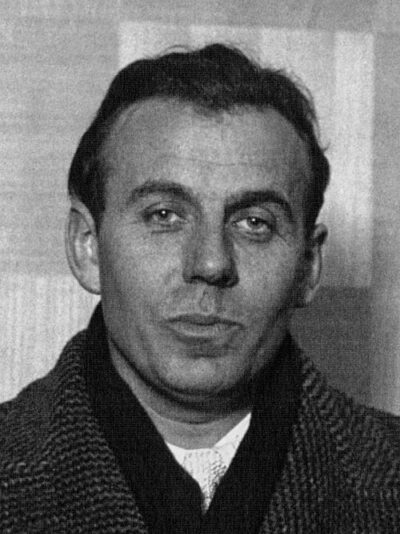
Louis-Ferdinand Céline
Louis-Ferdinand Céline was a French writer. Born May 27, 1894, in Courbevoie. Died July 1, 1961, in Meudon. Known for Journey to the End of the Night, Death on Credit and Castle to Castle. Educated at University of Rennes. Awards include Prix Renaudot, Croix de guerre 1914–1918 and Médaille militaire.
Facts
38 facts · 2 confirmed by two sources · 8 cited · 28 from one source
Where this comes from
Papalocal keeps its own record. It started from these sources; what each one said is kept here as it was copied, so a change on their side never changes this page by itself. Tap one to read its version.
What Wikidata says · copied November 16, 2026 · revision 2567970604
- Described as
- French writer (1894–1961)
- Other names
- Dr. Louis Ferdinand Auguste Destouches, Louis Ferdinand Destouches, Lui-Ferdinand Selin, L.-F. Selin, L.-F. Céline, Louis-Ferdinand Celine, L.-F. Celine, Louis Ferdinand Céline
- Born
- May 27, 1894 · 18 references
- Died
- July 1, 1961 · 16 references
- Born in
- Courbevoie · 3 references
- Died in
- Meudon · 3 references
- Buried in
- Longs-Réages cemetery
- Cause of death
- intracranial aneurysm
- Name at birth
- Louis Ferdinand Destouches · 1 reference
- Citizen of
- France · 1 reference
- Occupation
- physician writer; novelist; writer · 4 references; military personnel · 1 reference; physician · 1 reference
- Worked for
- League of Nations
- Education
- University of Rennes
- Genre
- polemical lampoon; libretto; essay
- Known for
- Journey to the End of the Night (1932); Death on Credit (1936); Castle to Castle (1957); Trifles for a Massacre (1937); Normance (1952); North; Rigadoon; Fable for Another Time; Guignol's Band (1944); Cannon-Fodder (1949)
- Awards
- Prix Renaudot (1932) · 1 reference; Croix de guerre 1914–1918 · 1 reference; Médaille militaire · 1 reference
- Field
- medicine
- Spouse
- Edith Follet (1919–1926); Lucette Destouches (1935–1961); Elizabeth Craig (1926–1933) · 1 reference
- Father
- Fernand Destouches
- Military branch
- cuirassier · 1 reference
- Military rank
- non-commissioned officer · 1 reference
- Wikipedias with a page
- 95
Wikidata item Q151820 (wikidata.org/wiki/Q151820), public domain (CC0). Copied November 16, 2026.
What Wikipedia says · copied November 16, 2026 · revision 1382274120
Louis Ferdinand Auguste Destouches (27 May 1894 – 1 July 1961), better known by the pen name Louis-Ferdinand Céline ( say-LEEN; French: [lwi fɛʁdinɑ̃ selin] ), was a French novelist, polemicist, and physician. His first novel Journey to the End of the Night (1932) won the Prix Renaudot but divided critics due to the author's pessimistic depiction of the human condition and his writing style based on working-class speech. In subsequent novels such as Death on the Installment Plan (1936), Guignol's Band (1944) and Castle to Castle (1957), Céline further developed an innovative and distinctive literary style. Maurice Nadeau wrote: "What Joyce did for the English language...what the surrealists attempted to do for the French language, Céline achieved effortlessly and on a vast scale."
From 1937 Céline wrote a series of antisemitic polemical works in which he advocated a military alliance with Nazi Germany. He continued to publicly espouse antisemitic views during the German occupation of France, and after the Allied landing in Normandy in 1944, he fled to Germany and then Denmark where he lived in exile. He was convicted of collaboration by a French court in 1951 but was pardoned by a military tribunal soon after. He returned to France where he resumed his careers as a doctor and author.
Céline is widely considered to be one of the greatest French novelists of the 20th century, and his novels have had an enduring influence on later authors. However, he remains a controversial figure in France due to his antisemitism and activities during the Second World War.
- Born, in its opening lines
- May 27, 1894
- Died, in its opening lines
- July 1, 1961
From the Wikipedia article “Louis-Ferdinand Céline” (en.wikipedia.org/wiki/Louis-Ferdinand_Céline), by its contributors, under CC BY-SA 4.0 (creativecommons.org/licenses/by-sa/4.0/). Copied November 16, 2026; not changed.
Confirmed Two sources agree. Cited One source, and it names where it got it. One source One source, without a reference of its own. Sources disagree The sources disagree. We show the best-supported value and keep theirs below.
