
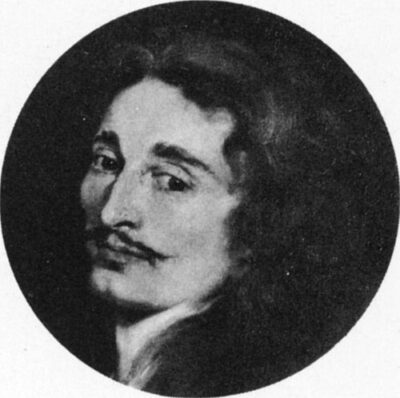
Louis Le Vau
Louis Le Vau was a French architect. Born 1612, in Paris. Died October 11, 1670, in Paris. Known for Château de Meudon, Palace of Versailles and Château du Raincy.
Facts
14 facts · 2 confirmed by two sources · 5 cited · 7 from one source
What’s different
- Born: we show 1612 (Confirmed). Wikidata also lists 1613
Where this comes from
Papalocal keeps its own record. It started from these sources; what each one said is kept here as it was copied, so a change on their side never changes this page by itself. Tap one to read its version.
What Wikidata says · copied November 16, 2026 · revision 2564328994
- Described as
- French architect (1613–1670)
- Other names
- Louis le Vau, Louis Leveau, Louis Levau
- Born
- 1613 · 18 references; 1612 · 3 references
- Died
- October 11, 1670 · 8 references
- Born in
- Paris · 1 reference
- Died in
- Paris · 1 reference
- Citizen of
- France · 1 reference
- Occupation
- architect · 3 references; artist
- Known for
- Château de Meudon; Palace of Versailles; Château du Raincy; Vaux-le-Vicomte; Palais de l'Institut de France
- Field
- architecture
- Siblings
- François Le Vau · 1 reference
- Wikipedias with a page
- 38
Wikidata item Q310530 (wikidata.org/wiki/Q310530), public domain (CC0). Copied November 16, 2026.
What Wikipedia says · copied November 16, 2026 · revision 1357256212
Louis Le Vau (French pronunciation: [lwi l(ə) vo]; c. 1612 – 11 October 1670) was a French architect, who worked for King Louis XIV. Along with Salomon de Brosse, Jacques Lemercier, and François Mansart, Louis Le Vau was one of the early exponents of French architectural classicism. He developed a style marked by sensitivity to context and originality of plan. His most notable works include the Hôtel Lambert, the château Vaux-le-Vicomte, and the Collège des Quatre-Nations (now the Institut de France).
- Born, in its opening lines
- c. 1612
- Died, in its opening lines
- October 11, 1670
From the Wikipedia article “Louis Le Vau” (en.wikipedia.org/wiki/Louis_Le_Vau), by its contributors, under CC BY-SA 4.0 (creativecommons.org/licenses/by-sa/4.0/). Copied November 16, 2026; not changed.
Confirmed Two sources agree. Cited One source, and it names where it got it. One source One source, without a reference of its own. Sources disagree The sources disagree. We show the best-supported value and keep theirs below.
