
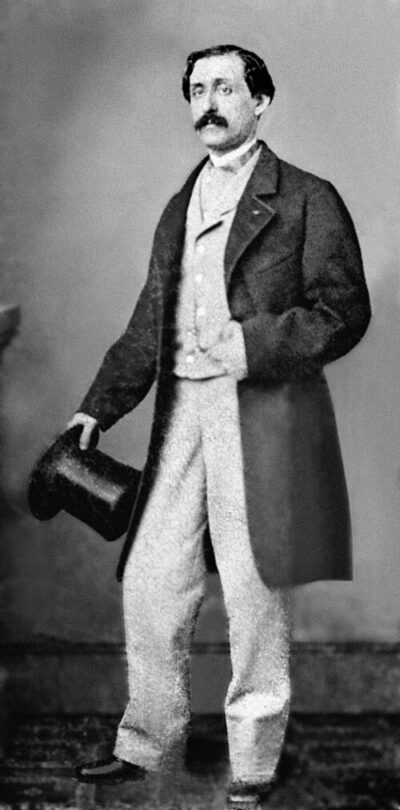
Louis Moreau Gottschalk
Louis Moreau Gottschalk was an American musician and composer. Born May 8, 1829, in New Orleans. Died December 18, 1869, in Rio de Janeiro. Known for Holy Ghost! with Light Divine and The Banjo.
Facts
19 facts · 2 confirmed by two sources · 7 cited · 10 from one source
Where this comes from
Papalocal keeps its own record. It started from these sources; what each one said is kept here as it was copied, so a change on their side never changes this page by itself. Tap one to read its version.
What Wikidata says · copied November 16, 2026 · revision 2567355890
- Described as
- American musician and composer (1829-1869)
- Other names
- Louis Gottschalk, L. M. Gottschalk, Gottschalk
- Born
- May 8, 1829 · 11 references
- Died
- December 18, 1869 · 12 references
- Born in
- New Orleans · 4 references
- Died in
- Rio de Janeiro · 2 references
- Buried in
- Green-Wood Cemetery · 1 reference
- Citizen of
- United States · 1 reference
- Occupation
- pianist · 1 reference; composer · 1 reference
- Genre
- opera; symphony; Romantic music; piano piece; Contradanza
- Instrument
- piano
- Known for
- Holy Ghost! with Light Divine; The Banjo
- Field
- music · 1 reference
- Siblings
- Clara Gottschalk Peterson; Blanche Gottschalk
- Wikipedias with a page
- 22
Wikidata item Q550701 (wikidata.org/wiki/Q550701), public domain (CC0). Copied November 16, 2026.
What Wikipedia says · copied November 16, 2026 · revision 1372242060
Louis Moreau Gottschalk (May 8, 1829 – December 18, 1869) was a Louisiana Creole and Jewish-American composer, pianist, and virtuoso performer of his own romantic piano works. He spent most of his working career outside the United States.
- Born, in its opening lines
- May 8, 1829
- Died, in its opening lines
- December 18, 1869
From the Wikipedia article “Louis Moreau Gottschalk” (en.wikipedia.org/wiki/Louis_Moreau_Gottschalk), by its contributors, under CC BY-SA 4.0 (creativecommons.org/licenses/by-sa/4.0/). Copied November 16, 2026; not changed.
Confirmed Two sources agree. Cited One source, and it names where it got it. One source One source, without a reference of its own. Sources disagree The sources disagree. We show the best-supported value and keep theirs below.
