
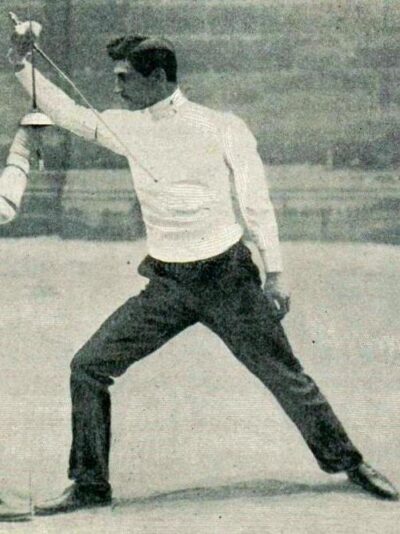
Louis Perrée
Louis Perrée was a French fencer. Born March 25, 1871, in 3rd arrondissement of Paris. Died March 1, 1924, in Ivry-la-Bataille. Awards include Knight of the Legion of Honour.
Facts
10 facts · 2 confirmed by two sources · 1 cited · 5 from one source · 2 where the sources disagree
What’s different
- Born in: we show 3rd arrondissement of Paris (Sources disagree). Wikidata also lists Saint-Josse-ten-Noode
- Died in: we show Ivry-la-Bataille (Sources disagree). Wikidata also lists Paris
Where this comes from
Papalocal keeps its own record. It started from these sources; what each one said is kept here as it was copied, so a change on their side never changes this page by itself. Tap one to read its version.
What Wikidata says · copied November 18, 2026 · revision 2519121168
- Described as
- French fencer (1871–1924)
- Other names
- Louis Perree, Louis Léonce Théophile Perrée
- Born
- March 25, 1871 · 2 references
- Died
- March 1, 1924 · 1 reference
- Born in
- 3rd arrondissement of Paris · 1 reference; Saint-Josse-ten-Noode
- Died in
- Ivry-la-Bataille; Paris
- Citizen of
- France
- Occupation
- fencer; writer
- Sport
- fencing
- Awards
- Knight of the Legion of Honour (1920) · 1 reference
- Field
- sports journalist
- Wikipedias with a page
- 20
Wikidata item Q2599319 (wikidata.org/wiki/Q2599319), public domain (CC0). Copied November 18, 2026.
What Wikipedia says · copied November 18, 2026 · revision 1216737569
Louis Léonce Théophile Perrée (25 March 1871 in Paris – 1 March 1924 in Ivry-la-Bataille) was a French fencer who competed in the late 19th century and early 20th century. He participated in Fencing at the 1900 Summer Olympics in Paris and won the silver medal in the epee. He was defeated by Ramón Fonst in the final.
- Born, in its opening lines
- March 25, 1871
- Died, in its opening lines
- March 1, 1924
From the Wikipedia article “Louis Perrée” (en.wikipedia.org/wiki/Louis_Perrée), by its contributors, under CC BY-SA 4.0 (creativecommons.org/licenses/by-sa/4.0/). Copied November 18, 2026; not changed.
Confirmed Two sources agree. Cited One source, and it names where it got it. One source One source, without a reference of its own. Sources disagree The sources disagree. We show the best-supported value and keep theirs below.
