
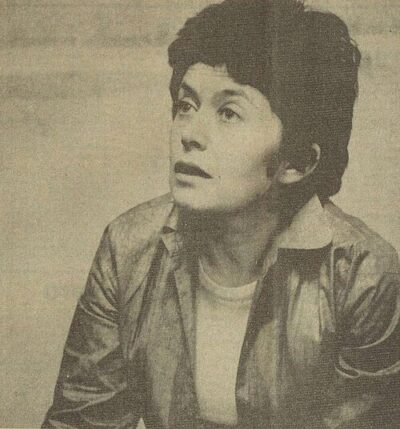
Luce Irigaray
Luce Irigaray is a Belgian-born French feminist, philosopher, linguist, psycholinguist, psychoanalyst and cultural theorist. Born May 3, 1930, in Blaton. Educated at Catholic University of Leuven (1834–1968) and Paris 8 University.
Facts
17 facts · 1 confirmed by two sources · 10 cited · 6 from one source
Where this comes from
Papalocal keeps its own record. It started from these sources; what each one said is kept here as it was copied, so a change on their side never changes this page by itself. Tap one to read its version.
What Wikidata says · copied November 16, 2026 · revision 2569086015
- Described as
- Belgian-born French feminist, philosopher, linguist, psycholinguist, psychoanalyst and cultural theorist (born 1930)
- Born
- May 3, 1930 · 2 references
- Born in
- Blaton · 2 references
- Citizen of
- Belgium · 1 reference; France · 1 reference
- Occupation
- philosopher · 2 references; linguist; university teacher; women's rights activist; psychoanalyst · 3 references; feminist · 2 references; cultural studies scholar · 1 reference
- Worked for
- National Center for Scientific Research (1964–) · 1 reference; Erasmus University Rotterdam
- Education
- Catholic University of Leuven (1834–1968) · 1 reference; Paris 8 University · 1 reference
- Member of
- École Freudienne de Paris
- Field
- gender studies
- Wikipedias with a page
- 49
Wikidata item Q28918 (wikidata.org/wiki/Q28918), public domain (CC0). Copied November 16, 2026.
What Wikipedia says · copied November 16, 2026 · revision 1379804424
Luce Irigaray (born 3 May 1930) is a Belgian-born French feminist, philosopher, linguist, psycholinguist, psychoanalyst, and cultural theorist who examines the uses and misuses of language in relation to women. She is considered one of the founders of French difference feminism.
Irigaray's first and most well known book, published in 1974, was Speculum of the Other Woman (1974), which analyzes the texts of Freud, Hegel, Plato, Aristotle, Descartes, and Kant through the lens of phallocentrism. Irigaray is the author of works analyzing many thinkers, including This Sex Which Is Not One (1977), which discusses Lacan's work as well as political economy; Elemental Passions (1982) can be read as a response to Maurice Merleau-Ponty's article “The Intertwining—The Chiasm” in The Visible and the Invisible, and in The Forgetting of Air in Martin Heidegger (1999), Irigaray critiques Heidegger's emphasis on the element of earth as the ground of life and speech and his "oblivion" or forgetting of air.
Irigaray employs three different modes in her investigations into the nature of gender, language, and identity: the analytic, the essayistic, and the lyrical poetic. As of October 2021, she is active in the women's movements in both France and Italy.
- Born, in its opening lines
- May 3, 1930
From the Wikipedia article “Luce Irigaray” (en.wikipedia.org/wiki/Luce_Irigaray), by its contributors, under CC BY-SA 4.0 (creativecommons.org/licenses/by-sa/4.0/). Copied November 16, 2026; not changed.
Confirmed Two sources agree. Cited One source, and it names where it got it. One source One source, without a reference of its own. Sources disagree The sources disagree. We show the best-supported value and keep theirs below.
