
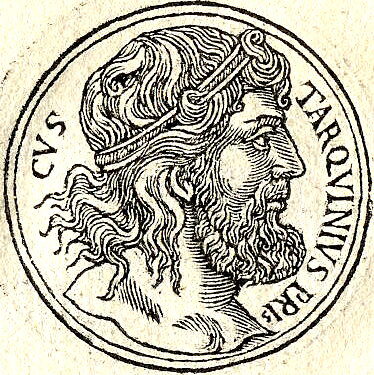
Lucius Tarquinius Priscus
Lucius Tarquinius Priscus was a legendary fifth King of Rome. Born 7th century BC, in Tarquinia. Died 578 BC, in Rome. Positions held include King of Rome (-616–-578).
Facts
18 facts · 0 confirmed by two sources · 8 cited · 10 from one source
Where this comes from
Papalocal keeps its own record. It started from these sources; what each one said is kept here as it was copied, so a change on their side never changes this page by itself. Tap one to read its version.
What Wikidata says · copied November 16, 2026 · revision 2568781429
- Described as
- legendary fifth King of Rome
- Other names
- Tarquin the Elder, Lucumo
- Born
- 7th century BC
- Died
- 578 BC
- Born in
- Tarquinia
- Died in
- Rome
- Cause of death
- exsanguination
- Citizen of
- Ancient Rome
- Occupation
- politician
- Positions held
- King of Rome (-616–-578)
- Spouse
- Tanaquil · 3 references; Gaia
- Children
- Gnaeus Tarquinius · 2 references; Tarquinia the Elder · 1 reference; Tarquinia the Younger · 1 reference; Tarquinia · 2 references; Arruns Tarquinius · 2 references; Lucius Tarquinius Superbus · 2 references
- Father
- Demaratus the Corinthian · 2 references
- Siblings
- Arruns Tarquinius
- Wikipedias with a page
- 53
Wikidata item Q212671 (wikidata.org/wiki/Q212671), public domain (CC0). Copied November 16, 2026.
What Wikipedia says · copied November 16, 2026 · revision 1378742833
Lucius Tarquinius Priscus (Classical Latin pronunciation: [tarˈkʷɪniʊs ˈpriːskʊs], or Tarquin the Elder) was the legendary fifth king of Rome and the first representative of the Etruscan dynasty on the Roman throne. The cognomen Priscus, meaning "Old" or "Elder" in Latin, became established in ancient sources to distinguish him from Tarquinius Superbus, or Tarquin the Proud, the seventh and last Roman king. He reigned for thirty-eight years. His wife was Tanaquil, renowned for her gift of prophecy. Tarquinius expanded Rome through military conquest; constructed enduring infrastructure such as the Circus Maximus and the Cloaca Maxima; reorganised state institutions including the Senate and the army; celebrated Rome's first triumphal procession (triumphus); and introduced numerous Etruscan civil and military symbols into Roman tradition—most notably the fasces, the curule seat, the toga praetexta, and the paludamentum.
From the Wikipedia article “Lucius Tarquinius Priscus” (en.wikipedia.org/wiki/Lucius_Tarquinius_Priscus), by its contributors, under CC BY-SA 4.0 (creativecommons.org/licenses/by-sa/4.0/). Copied November 16, 2026; not changed.
Confirmed Two sources agree. Cited One source, and it names where it got it. One source One source, without a reference of its own. Sources disagree The sources disagree. We show the best-supported value and keep theirs below.
