
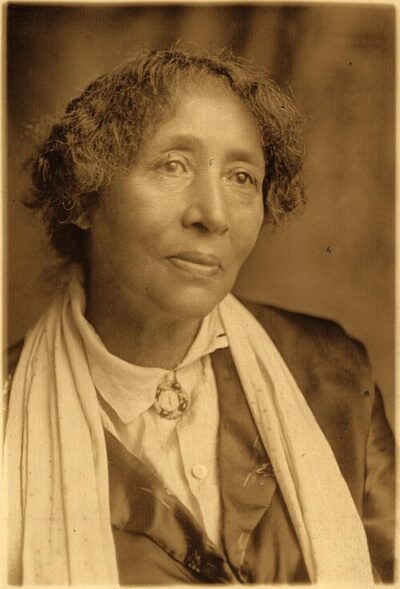
Lucy Parsons
Lucy Parsons was an American communist anarchist labor organizer (1851 or 1853–1942). Born 1851, in Virginia. Died March 7, 1942, in Chicago.
Facts
14 facts · 2 confirmed by two sources · 5 cited · 6 from one source · 1 where the sources disagree
What’s different
- Buried in: we show Haymarket Martyrs' Monument (Sources disagree). Wikidata also lists Forest Home Cemetery
Where this comes from
Papalocal keeps its own record. It started from these sources; what each one said is kept here as it was copied, so a change on their side never changes this page by itself. Tap one to read its version.
What Wikidata says · copied November 15, 2026 · revision 2568572591
- Described as
- American communist anarchist labor organizer (1851 or 1853–1942)
- Other names
- Lucy González Parsons, Lucy Gonzalez Parsons, Lucy Eldine Gonzalez Parsons, Lucy Eldine Parsons, Lucy Eldine González Parsons, Lucia González, Lucia González Parsons
- Born
- 1851 · 4 references
- Died
- March 7, 1942 · 3 references
- Born in
- Virginia
- Died in
- Chicago · 1 reference
- Buried in
- Forest Home Cemetery; Haymarket Martyrs' Monument · 1 reference
- Cause of death
- conflagration · 1 reference
- Citizen of
- United States
- Occupation
- journalist · 1 reference; trade unionist; anarchist · 1 reference; communist · 1 reference
- Spouse
- Albert Parsons · 1 reference; George Markstall
- Religion
- atheism
- Wikipedias with a page
- 34
Wikidata item Q3090218 (wikidata.org/wiki/Q3090218), public domain (CC0). Copied November 15, 2026.
What Wikipedia says · copied November 15, 2026 · revision 1371397954
Lucy E. Parsons (c. 1851 – March 7, 1942) was an American social anarchist and later anarcho-communist, well known throughout her long life for her fiery speeches and writings. She was a founding member of the Industrial Workers of the World. There are different versions of Parsons' early life: she herself said she was of mixed Mexican and Native American ancestry; historians believe she was born to an African-American slave, possibly in Virginia, then perhaps married a black freedman in Texas. She met the activist Albert Parsons in Waco, Texas, and claimed to have married him although no records have been found. They moved to Chicago together in late 1873 and her ideology was shaped by the harsh repression of workers in the Chicago railroad strike of 1877. She argued for labor organization and class struggle, writing polemical texts and speaking at events. She joined the Workingmen's Party of the United States and later the Knights of Labor, and she set up the Chicago Working Women's Union with her friend Lizzie Swank and other women.
Parsons had two children and worked in Chicago as a seamstress, later opening her own shop. After her husband was executed in 1887 following his conviction for being a ringleader in the Haymarket affair, she became internationally famous as an anarchist speaker, touring frequently across the United States and visiting England. She wrote articles and edited radical newspapers. She was helped financially by the Pioneer Aid and Support Association and wrote the biography The Life of Albert R. Parsons with her young lover Martin Lacher. In the decades following the 1917 Russian Revolution, Parsons moved towards communism. The Chicago police regarded her as a dangerous political figure and attempted many times to stop her from speaking publicly. She continued her activism as she grew older, clashing with the anarchist Emma Goldman over their differing attitudes to free love and supporting challenges to miscarriages of justice in the cases of Angelo Herndon, Tom Mooney, and the Scottsboro Boys. She died in a house fire on March 7, 1942. Her partner George Markstall returned to find the building on fire and was unable to rescue her; he died the following day. She was buried in the German Waldheim Cemetery, where the Haymarket Martyrs' Monument stands. After her death, Parsons was primarily referenced as the wife of Albert Parsons, until recent scholarship and two book-length biographies have commemorated her own achievements. The Chicago Park District named a park on Belmont Avenue after her in 2004.
- Born, in its opening lines
- c. 1851
- Died, in its opening lines
- March 7, 1942
From the Wikipedia article “Lucy Parsons” (en.wikipedia.org/wiki/Lucy_Parsons), by its contributors, under CC BY-SA 4.0 (creativecommons.org/licenses/by-sa/4.0/). Copied November 15, 2026; not changed.
Confirmed Two sources agree. Cited One source, and it names where it got it. One source One source, without a reference of its own. Sources disagree The sources disagree. We show the best-supported value and keep theirs below.
