
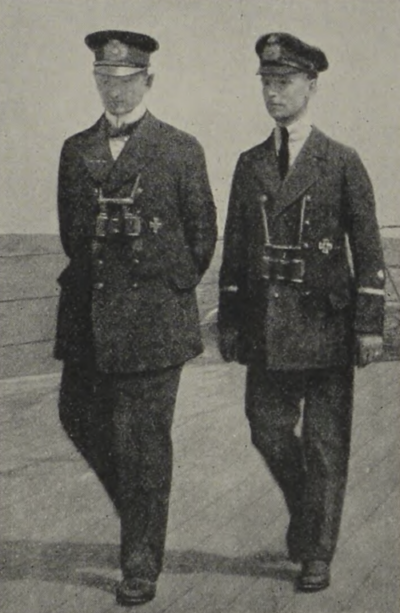
Ludwig von Reuter
Ludwig von Reuter was a German admiral. Born February 9, 1869, in Guben. Died December 18, 1943, in Potsdam. Awards include Order of the Red Eagle 2nd Class, Order of Military Merit and Knight Commander of the Order of Albrecht the Bold.
Facts
16 facts · 2 confirmed by two sources · 2 cited · 12 from one source
Where this comes from
Papalocal keeps its own record. It started from these sources; what each one said is kept here as it was copied, so a change on their side never changes this page by itself. Tap one to read its version.
What Wikidata says · copied November 18, 2026 · revision 2568966449
- Described as
- German admiral (1869–1943)
- Other names
- Hans Hermann Ludwig von Reuter
- Born
- February 9, 1869 · 3 references
- Died
- December 18, 1943 · 3 references
- Born in
- Guben
- Died in
- Potsdam
- Buried in
- Bornstedt Cemetery
- Citizen of
- German Reich
- Occupation
- Marineoffizier; admiral · 2 references
- Awards
- Order of the Red Eagle 2nd Class; Order of Military Merit; Knight Commander of the Order of Albrecht the Bold
- Field
- navy · 1 reference
- Military branch
- Imperial German Navy
- Military rank
- Admiral (1939–); kommodore (1915–); Konteradmiral (1916–)
- Wikipedias with a page
- 21
Wikidata item Q62978 (wikidata.org/wiki/Q62978), public domain (CC0). Copied November 18, 2026.
What Wikipedia says · copied November 18, 2026 · revision 1375931253
Hans Hermann Ludwig von Reuter (9 February 1869 – 18 December 1943) was a German admiral who commanded the High Seas Fleet when it was interned at Scapa Flow in the Orkney Islands at the end of World War I. On 21 June 1919 he ordered the scuttling of the German fleet at Scapa Flow to prevent the British from seizing the ships.
- Born, in its opening lines
- February 9, 1869
- Died, in its opening lines
- December 18, 1943
From the Wikipedia article “Ludwig von Reuter” (en.wikipedia.org/wiki/Ludwig_von_Reuter), by its contributors, under CC BY-SA 4.0 (creativecommons.org/licenses/by-sa/4.0/). Copied November 18, 2026; not changed.
Confirmed Two sources agree. Cited One source, and it names where it got it. One source One source, without a reference of its own. Sources disagree The sources disagree. We show the best-supported value and keep theirs below.
