
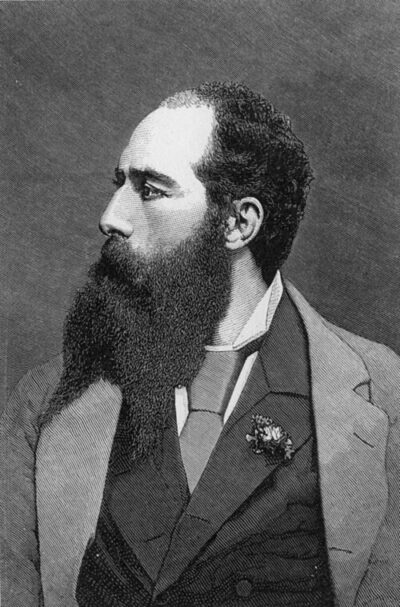
Luigi D'Albertis
Luigi D'Albertis was an Italian naturalist and alleged murderer. Born November 21, 1841, in Voltri. Died September 2, 1901, in Sassari.
Facts
15 facts · 2 confirmed by two sources · 5 cited · 8 from one source
Where this comes from
Papalocal keeps its own record. It started from these sources; what each one said is kept here as it was copied, so a change on their side never changes this page by itself. Tap one to read its version.
What Wikidata says · copied November 18, 2026 · revision 2542657713
- Described as
- Italian naturalist and alleged murderer (1841-1901)
- Other names
- Luigi Maria D'Albertis, L. M. D'Albertis, D'Albertis, L. D'Albertis
- Born
- November 21, 1841 · 1 reference
- Died
- September 2, 1901 · 1 reference
- Born in
- Voltri · 1 reference
- Died in
- Sassari · 1 reference
- Buried in
- Monumental Cemetery of Staglieno
- Cause of death
- cancer
- Citizen of
- Kingdom of Italy (1861–)
- Occupation
- explorer; naturalist; botanist; entomologist; ornithologist · 2 references; zoologist; botanical collector · 3 references; scientific collector · 1 reference
- Wikipedias with a page
- 22
Wikidata item Q1385188 (wikidata.org/wiki/Q1385188), public domain (CC0). Copied November 18, 2026.
What Wikipedia says · copied November 18, 2026 · revision 1386223781
Luigi Maria d'Albertis (21 November 1841 – 2 September 1901) was an Italian naturalist and explorer who, in 1875, became the first Italian to chart the Fly River in what is now called Papua New Guinea. He undertook three voyages up this river from 1875 to 1877, where the first was conducted in the steamer SS Ellengowan and the other two in a smaller ship named the Neva.
Throughout the three voyages, d'Albertis was consistently involved in skirmishes with the various indigenous people living along the river, using rifle-fire, rockets and dynamite to intimidate and, on occasions, kill these locals. He also frequently employed destructive dynamite fishing as a technique of obtaining aquatic specimens for his collection. His expedition stole many ancestral remains, tools and weapons from the houses of the locals. He also collected specimens of birds, plants, insects and the heads of recently killed native people. Contemporary explorers and colonial administrators of d'Albertis were almost universally critical of the methods he employed in his expeditions up the Fly, and more modern accounts, such as Goode's "Rape of the Fly" are equally condemnatory.
- Born, in its opening lines
- November 21, 1841
- Died, in its opening lines
- September 2, 1901
From the Wikipedia article “Luigi D'Albertis” (en.wikipedia.org/wiki/Luigi_D'Albertis), by its contributors, under CC BY-SA 4.0 (creativecommons.org/licenses/by-sa/4.0/). Copied November 18, 2026; not changed.
Confirmed Two sources agree. Cited One source, and it names where it got it. One source One source, without a reference of its own. Sources disagree The sources disagree. We show the best-supported value and keep theirs below.
