
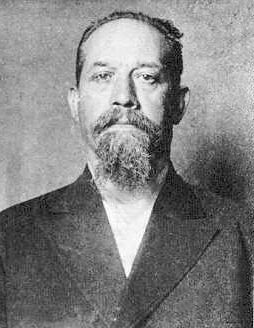
Luigi Galleani
Luigi Galleani was an Italian anarchist. Born August 12, 1861, in Vercelli. Died November 4, 1931, in Caprigliola. Educated at University of Turin.
Facts
9 facts · 2 confirmed by two sources · 0 cited · 7 from one source
Where this comes from
Papalocal keeps its own record. It started from these sources; what each one said is kept here as it was copied, so a change on their side never changes this page by itself. Tap one to read its version.
What Wikidata says · copied November 17, 2026 · revision 2518830470
- Described as
- Italian anarchist (1861–1931)
- Born
- August 12, 1861 · 2 references
- Died
- November 4, 1931 · 2 references
- Born in
- Vercelli
- Died in
- Caprigliola
- Cause of death
- myocardial infarction
- Citizen of
- Kingdom of Italy
- Occupation
- writer; lawyer
- Education
- University of Turin
- Wikipedias with a page
- 24
Wikidata item Q529189 (wikidata.org/wiki/Q529189), public domain (CC0). Copied November 17, 2026.
What Wikipedia says · copied November 17, 2026 · revision 1371139206
Luigi Galleani (Italian: [luˈiːdʒi ɡalleˈaːni]; 12 August 1861 – 4 November 1931) was an Italian insurrectionary anarchist and communist best known for his advocacy of "propaganda of the deed", a strategy of political assassinations and violent attacks.
Born in Vercelli, he became a leading figure in the Piedmont labor movement, for which he was sentenced to exile on the island of Pantelleria. In 1901, he fled to the United States and he joined the Italian immigrant workers movement in Paterson, New Jersey. He subsequently moved to Vermont and Massachusetts, where he launched the radical newspaper Cronaca Sovversiva. He gained many dedicated followers among Italian American anarchists, known as the Galleanisti, who carried out a series of bombing attacks throughout the United States.
For his involvement in the anti-war movement during World War I, he was deported back to Italy, where he was subjected to political repression following the rise of fascism. During the final years of his life, he published The End of Anarchism?, a defense of anarchist communism from criticisms by reformist socialists. He rejected reformism, in favor of "continuous attack" against institutions of capitalism and the state, and opposed any form of formal organization, which he saw as inherently corrupting and hierarchical.
- Born, in its opening lines
- August 12, 1861
- Died, in its opening lines
- November 4, 1931
From the Wikipedia article “Luigi Galleani” (en.wikipedia.org/wiki/Luigi_Galleani), by its contributors, under CC BY-SA 4.0 (creativecommons.org/licenses/by-sa/4.0/). Copied November 17, 2026; not changed.
Confirmed Two sources agree. Cited One source, and it names where it got it. One source One source, without a reference of its own. Sources disagree The sources disagree. We show the best-supported value and keep theirs below.
