
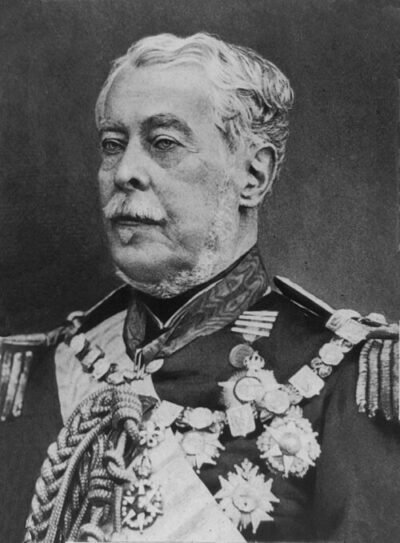
Luís Alves de Lima e Silva, Duke of Caxias
Luís Alves de Lima e Silva, Duke of Caxias was a Brazilian hero and politician. Born August 25, 1803, in Duque de Caxias. Died May 7, 1880, in Valença. Positions held include member of the Senate of Brazil (1846–1851), governor of Maranhão (1840–1841) and governor of Rio Grande do Sul (2 times) (1842–1851). Educated at Academia Militar das Agulhas Negras. Awards include Knight Grand Cross of the Order of the Imperial Rose, Grand Cross of the Order of the Southern Cross and Imperial Order of the Southern Cross.
Facts
22 facts · 2 confirmed by two sources · 2 cited · 18 from one source
What’s different
- Died: we show May 7, 1880 (Confirmed). Wikidata also lists May 8, 1880
Where this comes from
Papalocal keeps its own record. It started from these sources; what each one said is kept here as it was copied, so a change on their side never changes this page by itself. Tap one to read its version.
What Wikidata says · copied November 17, 2026 · revision 2567818183
- Described as
- Brazilian hero and politician (1803-1880)
- Other names
- Duque de Caxias, Duke of Caxias, Marshall Luiz Alves de Lima
- Born
- August 25, 1803 · 1 reference
- Died
- May 7, 1880 · 1 reference; May 8, 1880 · 2 references
- Born in
- Duque de Caxias
- Died in
- Valença · 1 reference
- Citizen of
- Brazil
- Occupation
- politician · 1 reference; military personnel · 1 reference
- Positions held
- member of the Senate of Brazil (1846–1851); governor of Maranhão (1840–1841); governor of Rio Grande do Sul (2 times) (1842–1851); President of the Brazilian Council of Ministers (3 times) (1856–1878)
- Political party
- Conservative Party (1843–)
- Education
- Academia Militar das Agulhas Negras
- Member of
- Grande Oriente do Brasil
- Awards
- Knight Grand Cross of the Order of the Imperial Rose; Grand Cross of the Order of the Southern Cross; Imperial Order of the Southern Cross; Grand Cross of the Order of the Immaculate Conception of Vila Viçosa; Livro dos Heróis e Heroínas da Pátria
- Spouse
- Ana Luiza Carneiro Viana
- Children
- Luís Alves de Lima e Silva
- Military rank
- marshal
- Wikipedias with a page
- 26
Wikidata item Q712089 (wikidata.org/wiki/Q712089), public domain (CC0). Copied November 17, 2026.
What Wikipedia says · copied November 17, 2026 · revision 1374315027
Luís Alves de Lima e Silva, Duke of Caxias (pronounced [kaˈʃi.ɐs]; 25 August 1803 – 7 May 1880), nicknamed "o Pacificador" ("the Peacemaker") and "o Duque de Ferro" ("the Iron Duke"), was an army officer, politician and monarchist of the Empire of Brazil. Like his father and uncles, Caxias pursued a military career. In 1823 he fought as a young officer in the Brazilian War of Independence against Portugal, then spent three years in Brazil's southernmost province, Cisplatina, as the government unsuccessfully resisted that province's secession in the Cisplatine War. Though his own father and uncles renounced Emperor Dom Pedro I during the protests of 1831, Caxias remained loyal. Pedro I abdicated in favor of his young son Dom Pedro II, whom Caxias instructed in swordsmanship and horsemanship and eventually befriended.
During Pedro II's minority the governing regency faced countless rebellions throughout the country. Again breaking with his father and other relatives sympathetic to the rebels, from 1839 to 1845 Caxias commanded loyalist forces suppressing such uprisings as the Balaiada, the Liberal rebellions of 1842 and the Ragamuffin War. In 1851, under his command, the Brazilian army prevailed against the Argentine Confederation in the Platine War; a decade later Caxias, as army marshal (the army's highest rank), led Brazilian forces to victory in the Paraguayan War. As a reward he was raised to the titled nobility, becoming successively a baron, count, and marquis, finally becoming the only person created duke during Pedro II's 58-year reign.
In the early 1840s Caxias became a member of the Reactionary Party, which evolved into the Party of Order and finally the Conservative Party. He was elected senator in 1846. The Emperor appointed him president of the Council of Ministers (prime minister) in 1856; he briefly held that office again in 1861, but fell when his party lost its parliamentary majority. Over the decades Caxias witnessed the growth and zenith of his party, then its slow decline as internal conflict divided it. In 1875, he headed a cabinet for the last time, and after years of failing health he died in May 1880.
In the years after his death and mainly following the downfall of the Brazilian monarchy, Caxias's reputation was initially overshadowed by that of Manuel Luís Osório, Marquis of Erval, but with time surpassed even Erval's renown. In 1925 his birthday was established as the Day of the Soldier, a day of honor for the Brazilian army. On 13 March 1962 he was officially designated the army's protector—its soldierly ideal and the most important figure in its tradition. Historians have regarded Caxias positively, several ranking him as the greatest of Brazil's military officers.
- Born, in its opening lines
- August 25, 1803
- Died, in its opening lines
- May 7, 1880
From the Wikipedia article “Luís Alves de Lima e Silva, Duke of Caxias” (en.wikipedia.org/wiki/Luís_Alves_de_Lima_e_Silva,_Duke_of_Caxias), by its contributors, under CC BY-SA 4.0 (creativecommons.org/licenses/by-sa/4.0/). Copied November 17, 2026; not changed.
Confirmed Two sources agree. Cited One source, and it names where it got it. One source One source, without a reference of its own. Sources disagree The sources disagree. We show the best-supported value and keep theirs below.
