
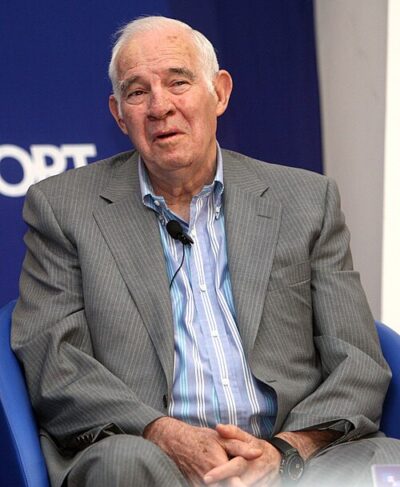
Luis Aragonés
Luis Aragonés was a Spanish football player and manager. Born July 28, 1938, in Madrid. Died February 1, 2014, in Madrid. Teams include Real Madrid Club de Fútbol (1958–1960), Recreativo de Huelva (1958–1959) and Getafe CF (1957–1958). Educated at Our Lady of Remembrance College. Awards include Gold Medal of the Royal Order of Sports Merit.
Facts
22 facts · 2 confirmed by two sources · 3 cited · 17 from one source
Where this comes from
Papalocal keeps its own record. It started from these sources; what each one said is kept here as it was copied, so a change on their side never changes this page by itself. Tap one to read its version.
What Wikidata says · copied November 16, 2026 · revision 2560706820
- Described as
- Spanish football player and manager (1938–2014)
- Other names
- El Sabio de Hortaleza, José Luis Aragonés Suárez, Luis Aragonés Suárez
- Born
- July 28, 1938 · 4 references
- Died
- February 1, 2014 · 3 references
- Born in
- Madrid
- Died in
- Madrid · 1 reference
- Name at birth
- José Luis Aragonés Suárez-Martínez
- Citizen of
- Spain
- Occupation
- association football player · 1 reference; association football coach · 1 reference
- Education
- Our Lady of Remembrance College
- Teams
- Real Madrid Club de Fútbol (1958–1960); Recreativo de Huelva (1958–1959); Getafe CF (1957–1958); Real Oviedo (1960–1961); Real Madrid Castilla (1960); Real Betis Balompié (1961–1964); Hércules CF (1959–1960); Atlético Madrid (1964–1974); Getafe Deportivo (1957–1958); Spain men's national football team (1964–1972)
- Sport
- association football
- Awards
- Gold Medal of the Royal Order of Sports Merit
- Height
- 1.80 m (5 ft 11 in)
- Wikipedias with a page
- 59
Wikidata item Q576614 (wikidata.org/wiki/Q576614), public domain (CC0). Copied November 16, 2026.
What Wikipedia says · copied November 16, 2026 · revision 1381399003
Luis Aragonés Suárez (Spanish pronunciation: [ˈlwis aɾaɣoˈnes ˈswaɾeθ]; 28 July 1938 – 1 February 2014) was a Spanish football player and manager.
Aragonés spent the majority of his career as a player and coach at Atlético Madrid. He was a prominent player and then coach of the successful Atlético team of the late 1960s and early 1970s. The team were national champions four times, reached the 1974 European Cup Final. Between 1964 and 1974, he played 265 Primera Liga games for Atlético and scored 123 goals. He also played for several other clubs, including Real Madrid, and played 11 times for Spain, scoring three goals.
Apart from Atlético he also coached seven other La Liga clubs as well as the Spain national team, whom he led to their second European Championship title in 2008. He then became the head coach of the Turkish club Fenerbahçe after the tournament, the only time he coached outside his native Spain.
- Born, in its opening lines
- July 28, 1938
- Died, in its opening lines
- February 1, 2014
From the Wikipedia article “Luis Aragonés” (en.wikipedia.org/wiki/Luis_Aragonés), by its contributors, under CC BY-SA 4.0 (creativecommons.org/licenses/by-sa/4.0/). Copied November 16, 2026; not changed.
Confirmed Two sources agree. Cited One source, and it names where it got it. One source One source, without a reference of its own. Sources disagree The sources disagree. We show the best-supported value and keep theirs below.
