
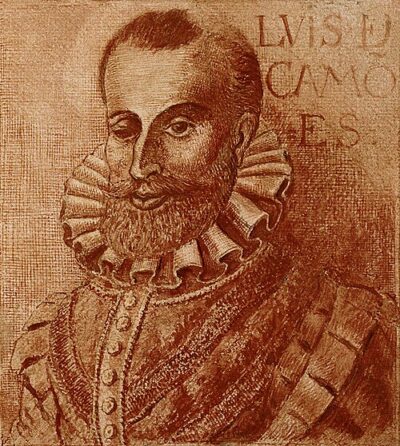
Luís de Camões
Luís de Camões was the 16th-century Portuguese poet. Born December 1524, in Lisbon. Died June 10, 1580, in Lisbon. Known for Os Lusíadas. Educated at University of Coimbra.
Facts
17 facts · 0 confirmed by two sources · 7 cited · 9 from one source · 1 where the sources disagree
What’s different
- Born: we show December 1524 (Sources disagree). Wikidata also lists January 1525
Where this comes from
Papalocal keeps its own record. It started from these sources; what each one said is kept here as it was copied, so a change on their side never changes this page by itself. Tap one to read its version.
What Wikidata says · copied November 16, 2026 · revision 2565593989
- Described as
- 16th-century Portuguese poet
- Other names
- Luis de Camoens, Camoëns, Luís Vaz de Camões, Camoens, Luís de Camoens, Camões
- Born
- December 1524 · 1 reference; January 1525 · 1 reference
- Died
- June 10, 1580 · 3 references
- Born in
- Lisbon · 2 references
- Died in
- Lisbon · 3 references
- Buried in
- Jerónimos Monastery
- Citizen of
- Kingdom of Portugal
- Occupation
- poet · 2 references; playwright; writer · 2 references; military personnel · 1 reference
- Education
- University of Coimbra
- Known for
- Os Lusíadas
- Field
- poetry · 1 reference; drama · 1 reference
- Father
- Simão Vaz de Camões
- Mother
- Ana de Sá de Macedo
- Religion
- Catholicism
- Wikipedias with a page
- 113
Wikidata item Q590 (wikidata.org/wiki/Q590), public domain (CC0). Copied November 16, 2026.
What Wikipedia says · copied November 16, 2026 · revision 1382787829
Luís Vaz de Camões (European Portuguese: [luˈiʒ ˈvaʒ ðɨ kaˈmõjʃ]; c. 1524 or 1525 – 10 June 1580), sometimes rendered in English as Camoens or Camoëns ( KAM-oh-ənz), was a Portuguese poet, considered Portugal's and the Portuguese language's greatest poet. His mastery of verse has been compared to that of Shakespeare, Milton, Vondel, Homer, Virgil and Dante. He wrote a considerable amount of lyrical poetry and drama but is best remembered for his epic work Os Lusíadas (The Lusiads). His collection of poetry The Parnasum of Luís de Camões was lost during his life. The influence of his masterpiece Os Lusíadas is so profound that Portuguese is sometimes called the "language of Camões".
The day of his death, 10 June, is Portugal's national day.
From the Wikipedia article “Luís de Camões” (en.wikipedia.org/wiki/Luís_de_Camões), by its contributors, under CC BY-SA 4.0 (creativecommons.org/licenses/by-sa/4.0/). Copied November 16, 2026; not changed.
Confirmed Two sources agree. Cited One source, and it names where it got it. One source One source, without a reference of its own. Sources disagree The sources disagree. We show the best-supported value and keep theirs below.
