
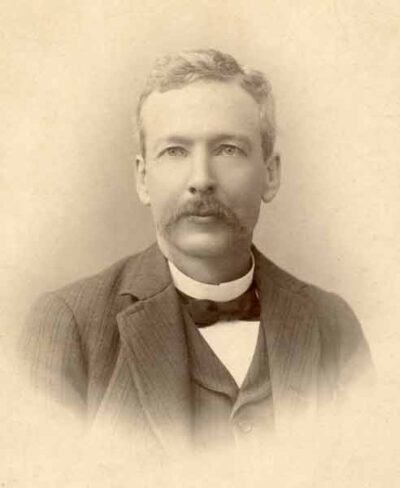
Luther Burbank
Luther Burbank was an American botanist and horticulturist. Born March 7, 1849, in Lancaster. Died April 11, 1926, in Santa Rosa. Awards include National Inventors Hall of Fame.
Facts
22 facts · 2 confirmed by two sources · 6 cited · 14 from one source
Where this comes from
Papalocal keeps its own record. It started from these sources; what each one said is kept here as it was copied, so a change on their side never changes this page by itself. Tap one to read its version.
What Wikidata says · copied November 13, 2026 · revision 2539677412
- Described as
- American botanist and horticulturist (1849–1926)
- Other names
- Burbank
- Born
- March 7, 1849 · 7 references
- Died
- April 11, 1926 · 6 references
- Born in
- Lancaster
- Died in
- Santa Rosa · 1 reference
- Buried in
- Luther Burbank Memorial Home and Gardens Cemetery · 1 reference
- Cause of death
- myocardial infarction
- Citizen of
- United States
- Occupation
- horticulturist; geneticist; botanist · 1 reference; gardener; academic; non-fiction writer; inventor · 1 reference; eugenicist · 1 reference
- Member of
- American Association for the Advancement of Science · 1 reference
- Awards
- National Inventors Hall of Fame (1986) · 1 reference
- Field
- horticulture
- Father
- Samuel Walton Burbank · 1 reference
- Mother
- Olive Ross · 1 reference
- Siblings
- Emma Louise Burbank Beeson
- Religion
- atheism
- Wikipedias with a page
- 46
Wikidata item Q333419 (wikidata.org/wiki/Q333419), public domain (CC0). Copied November 13, 2026.
What Wikipedia says · copied November 13, 2026 · revision 1384338944
Luther Burbank (March 7, 1849 – April 11, 1926) was an American botanist, horticulturist, and pioneer in agricultural science who developed more than 800 strains and varieties of plants over his 55-year career. Burbank primarily worked with fruits, flowers, grains, grasses, and vegetables. He developed (but did not create) a spineless cactus (useful for cattle-feed) and the plumcot.
Burbank's most successful strains and varieties included the Shasta daisy, the fire poppy (note possible confusion with the California wildflower, Papaver californicum, which is also called a "fire poppy"), the "July Elberta" peach, the "Santa Rosa" plum, the "Flaming Gold" nectarine, the "Wickson" plum (named after the agronomist Edward J. Wickson), the freestone peach, and the white blackberry.
A natural genetic variant of the Burbank potato with russet-colored skin later became known as the russet Burbank potato. This large, brown-skinned, white-fleshed potato has become the world's predominant potato in food processing. The Russet Burbank potato originated to help with the devastating situation in Ireland following the Great Famine of 1845–1852. This particular potato variety was developed by Burbank and exported to Ireland to "revive that country's leading crop" as it is slightly late-blight-resistant. (Late blight is a disease that spread and destroyed potatoes all across Europe, but caused extreme chaos in Ireland due to the Irish population's high dependency on potatoes as a crop.)
- Born, in its opening lines
- March 7, 1849
- Died, in its opening lines
- April 11, 1926
From the Wikipedia article “Luther Burbank” (en.wikipedia.org/wiki/Luther_Burbank), by its contributors, under CC BY-SA 4.0 (creativecommons.org/licenses/by-sa/4.0/). Copied November 13, 2026; not changed.
Confirmed Two sources agree. Cited One source, and it names where it got it. One source One source, without a reference of its own. Sources disagree The sources disagree. We show the best-supported value and keep theirs below.
