
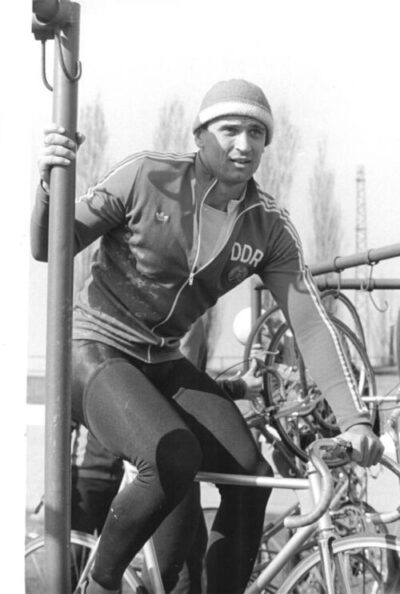
Lutz Heßlich is an East German racing cyclist. Born January 17, 1959, in Ortrand. Awards include Patriotic Order of Merit in Gold, Star of People's Friendship in Gold and Grand Star of People's Friendship.
Facts
10 facts · 1 confirmed by two sources · 1 cited · 8 from one source
Where this comes from
Papalocal keeps its own record. It started from these sources; what each one said is kept here as it was copied, so a change on their side never changes this page by itself. Tap one to read its version.
What Wikidata says · copied November 18, 2026 · revision 2568994852
- Described as
- East German racing cyclist
- Born
- January 17, 1959
- Born in
- Ortrand
- Citizen of
- Germany (1990–); East Germany (–1990)
- Occupation
- sport cyclist
- Sport
- track cycling
- Awards
- Patriotic Order of Merit in Gold; Star of People's Friendship in Gold (1988); Grand Star of People's Friendship
- Height
- 1.85 m (6 ft 1 in) · 1 reference
- Wikipedias with a page
- 21
Wikidata item Q63635 (wikidata.org/wiki/Q63635), public domain (CC0). Copied November 18, 2026.
What Wikipedia says · copied November 18, 2026 · revision 1380409725
Lutz Heßlich (born 17 January 1959) is a former racing cyclist from East Germany.
He competed for East Germany in the 1980 Summer Olympics held in Moscow, Soviet Union in the individual sprint event where he finished in first place. He missed the 1984 Summer Olympics due to the Soviet led boycott but returned to the 1988 Summer Olympics in Seoul, South Korea where he won a second gold medal in the individual sprint. In October 1986, he was awarded a Star of People's Friendship in gold (second class) for his sporting success.
Between 1979 and 1987 he was four times world champion in individual sprint.
- Born, in its opening lines
- January 17, 1959
From the Wikipedia article “Lutz Heßlich” (en.wikipedia.org/wiki/Lutz_Heßlich), by its contributors, under CC BY-SA 4.0 (creativecommons.org/licenses/by-sa/4.0/). Copied November 18, 2026; not changed.
Confirmed Two sources agree. Cited One source, and it names where it got it. One source One source, without a reference of its own. Sources disagree The sources disagree. We show the best-supported value and keep theirs below.
