
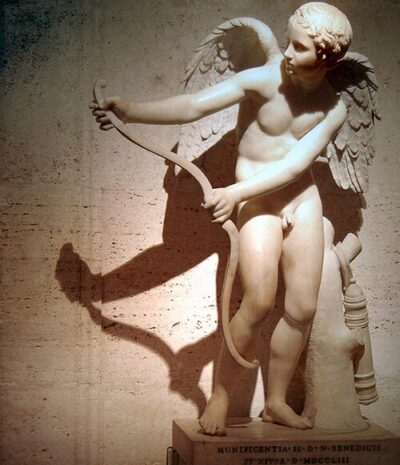
Lysippos
Lysippos was the 4th-century BC Greek sculptor. Born 390 BC, in Sicyon. Died 300 BC. Known for Horses of Saint Mark, Apoxyomenos and Victorious Youth.
Facts
20 facts · 0 confirmed by two sources · 7 cited · 13 from one source
Where this comes from
Papalocal keeps its own record. It started from these sources; what each one said is kept here as it was copied, so a change on their side never changes this page by itself. Tap one to read its version.
What Wikidata says · copied November 16, 2026 · revision 2548951489
- Described as
- 4th-century BC Greek sculptor
- Other names
- Lysipp, Lysippos of Sikyon, Lisippo, Lysippus
- Born
- 390 BC
- Died
- 300 BC
- Born in
- Sicyon
- Citizen of
- Sicyon
- Occupation
- sculptor · 3 references; brazier; architect
- Genre
- portrait
- Known for
- Horses of Saint Mark; Apoxyomenos; Victorious Youth; Troilos statue at Olympia · 1 reference; statue of the pankratiast Xenarkes at Olympia · 1 reference; Cheilon statue at Olympia · 1 reference; Poulydamas statue at Olympia · 1 reference; Pythes statue at Olympia · 1 reference; Kallikrates statue at Olympia · 1 reference
- Children
- Euthycrates; Daippus; Boedas
- Wikipedias with a page
- 51
Wikidata item Q192222 (wikidata.org/wiki/Q192222), public domain (CC0). Copied November 16, 2026.
What Wikipedia says · copied November 16, 2026 · revision 1380866677
Lysippos (; Ancient Greek: Λύσιππος) was a Greek sculptor of the 4th century BC. Together with Scopas and Praxiteles, he is considered one of the three greatest sculptors of the Classical Greek era, bringing transition into the Hellenistic period. The Victorious Youth or Getty bronze, which resurfaced around 1972, has been associated with him.
From the Wikipedia article “Lysippos” (en.wikipedia.org/wiki/Lysippos), by its contributors, under CC BY-SA 4.0 (creativecommons.org/licenses/by-sa/4.0/). Copied November 16, 2026; not changed.
Confirmed Two sources agree. Cited One source, and it names where it got it. One source One source, without a reference of its own. Sources disagree The sources disagree. We show the best-supported value and keep theirs below.
