
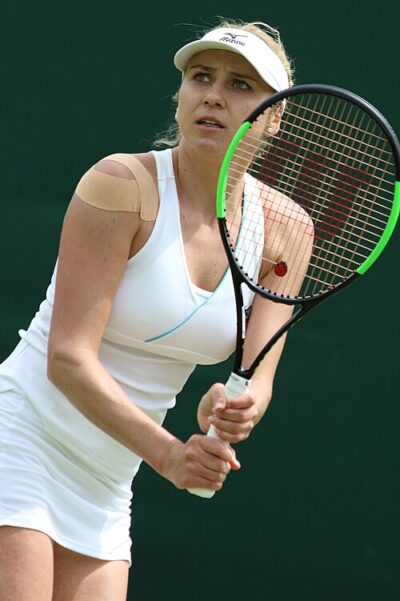
Lyudmyla Kichenok is an Ukrainian tennis player. Born July 20, 1992, in Dnipro. Teams include Ukraine Billie Jean King Cup team (2010–).
Facts
8 facts · 1 confirmed by two sources · 5 cited · 2 from one source
Where this comes from
Papalocal keeps its own record. It started from these sources; what each one said is kept here as it was copied, so a change on their side never changes this page by itself. Tap one to read its version.
What Wikidata says · copied November 17, 2026 · revision 2570496840
- Described as
- Ukrainian tennis player
- Other names
- Liudmyla Kichenok, Liudmyla Viktorivna Kichenok, Lyudmyla Viktorivna Kichenok
- Born
- July 20, 1992 · 1 reference
- Born in
- Dnipro · 1 reference
- Citizen of
- Ukraine · 1 reference
- Occupation
- tennis player · 1 reference
- Teams
- Ukraine Billie Jean King Cup team (2010–) · 1 reference
- Sport
- tennis · 1 reference
- Siblings
- Nadiia Kichenok
- Height
- 1.75 m (5 ft 9 in) · 1 reference
- Wikipedias with a page
- 26
Wikidata item Q4222570 (wikidata.org/wiki/Q4222570), public domain (CC0). Copied November 17, 2026.
What Wikipedia says · copied November 17, 2026 · revision 1383887477
Lyudmyla Viktorivna Kichenok (Ukrainian: Людмила Вікторівна Кіченок, IPA: [lʲʊdˈmɪlɐ ˈwiktor⁽ʲ⁾iu̯nɐ kitʃeˈnɔk]; born 20 July 1992) is a Ukrainian professional tennis player. She has been ranked as high as world No. 3 in doubles. She is a two-time Grand Slam champion winning the 2024 US Open with Jeļena Ostapenko and the 2023 Wimbledon Championships with Mate Pavić becoming the first Ukrainian to do so.
Kichenok has won ten additional doubles titles on the WTA Tour, including four with her twin sister, Nadiia. On 21 July 2014, she reached her career-high singles rankings of 156.
- Born, in its opening lines
- July 20, 1992
From the Wikipedia article “Lyudmyla Kichenok” (en.wikipedia.org/wiki/Lyudmyla_Kichenok), by its contributors, under CC BY-SA 4.0 (creativecommons.org/licenses/by-sa/4.0/). Copied November 17, 2026; not changed.
Confirmed Two sources agree. Cited One source, and it names where it got it. One source One source, without a reference of its own. Sources disagree The sources disagree. We show the best-supported value and keep theirs below.
