
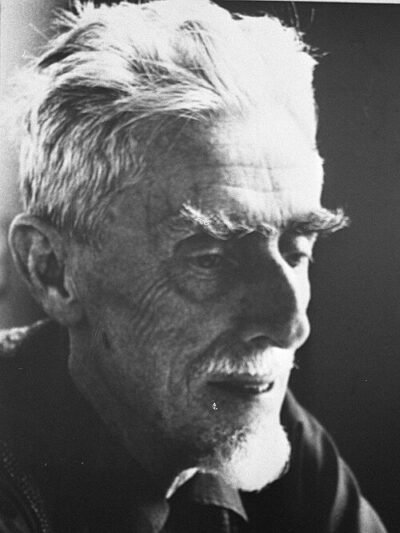
M. C. Escher
M. C. Escher was a Dutch graphic artist. Born June 17, 1898, in Leeuwarden. Died March 27, 1972, in Laren. Known for Still Life with Spherical Mirror, Waterfall and Ascending and Descending. Educated at De Teekenschool voor de Kunstnijverheid. Awards include Knight of the Order of Orange-Nassau.
Facts
37 facts · 2 confirmed by two sources · 23 cited · 12 from one source
Where this comes from
Papalocal keeps its own record. It started from these sources; what each one said is kept here as it was copied, so a change on their side never changes this page by itself. Tap one to read its version.
What Wikidata says · copied November 16, 2026 · revision 2568841802
- Described as
- Dutch graphic artist (1898–1972)
- Other names
- Mauricio Escher, Mauk Escher, M.C. Escher, Escher, Maurits Escher, Maurits Cornelis Escher
- Born
- June 17, 1898 · 12 references
- Died
- March 27, 1972 · 12 references
- Born in
- Leeuwarden · 4 references
- Died in
- Laren · 1 reference
- Buried in
- New general cemetery Baarn
- Name at birth
- Maurits Cornelis Escher
- Citizen of
- Kingdom of the Netherlands · 1 reference
- Occupation
- printmaker · 3 references; illustrator · 3 references; postage stamp designer · 3 references; graphic artist · 5 references; photographer · 3 references; draftsperson · 3 references; lithographer · 2 references; wood engraver · 3 references
- Education
- De Teekenschool voor de Kunstnijverheid · 1 reference
- Member of
- College of 'Pataphysics; Accademia delle Arti del Disegno
- Genre
- animal painting · 1 reference; abstract art · 1 reference; figure · 1 reference; landscape painting · 1 reference; cityscape · 1 reference; still life · 1 reference
- Known for
- Still Life with Spherical Mirror; Waterfall · 1 reference; Ascending and Descending · 1 reference
- Awards
- Knight of the Order of Orange-Nassau
- Field
- ceramic art · 1 reference
- Spouse
- Jetta Umiker (1924–) · 1 reference
- Father
- George Arnold Escher
- Mother
- Sara Adriana Gleichman
- Siblings
- Johan George Escher · 1 reference
- Lived in
- Leeuwarden (–1903) · 1 reference; Arnhem (1903–) · 1 reference; Rome (1924–1935) · 1 reference
- Website
- http://www.mcescher.com/
- Wikipedias with a page
- 87
Wikidata item Q1470 (wikidata.org/wiki/Q1470), public domain (CC0). Copied November 16, 2026.
What Wikipedia says · copied November 16, 2026 · revision 1378845402
Maurits Cornelis Escher (; Dutch: [ˈmʌurɪts kɔrˈneːlɪs ˈɛɕər]; 17 June 1898 – 27 March 1972) was a Dutch graphic artist who made woodcuts, lithographs, and mezzotints, many of which were inspired by mathematics.
Despite wide popular interest, for most of his life Escher was neglected in the art world, even in his native Netherlands. He was 70 before a retrospective exhibition was held. In the late twentieth century, he became more widely appreciated, and in the twenty-first century he has been celebrated in exhibitions around the world.
His work features mathematical objects and operations including impossible objects, explorations of infinity, reflection, symmetry, perspective, truncated and stellated polyhedra, hyperbolic geometry, and tessellations. Although Escher believed he had no mathematical ability, he interacted with the mathematicians George Pólya, Roger Penrose, and Donald Coxeter, and the crystallographer Friedrich Haag, and conducted his own research into tessellation.
Early in his career, he drew inspiration from nature, making studies of insects, landscapes, and plants such as lichens, all of which he used as details in his artworks. He traveled in Italy and Spain, sketching buildings, townscapes, architecture and the tilings of the Alhambra and the Mezquita of Cordoba, and became steadily more interested in their mathematical structure.
Escher's art became well known among scientists and mathematicians, and in popular culture, especially after it was featured by Martin Gardner in his April 1966 Mathematical Games column in Scientific American. Apart from being used in a variety of technical papers, his work has appeared on the covers of many books and albums. He was one of the major inspirations for Douglas Hofstadter's Pulitzer Prize–winning 1979 book Gödel, Escher, Bach.
- Born, in its opening lines
- June 17, 1898
- Died, in its opening lines
- March 27, 1972
From the Wikipedia article “M. C. Escher” (en.wikipedia.org/wiki/M._C._Escher), by its contributors, under CC BY-SA 4.0 (creativecommons.org/licenses/by-sa/4.0/). Copied November 16, 2026; not changed.
Confirmed Two sources agree. Cited One source, and it names where it got it. One source One source, without a reference of its own. Sources disagree The sources disagree. We show the best-supported value and keep theirs below.
