
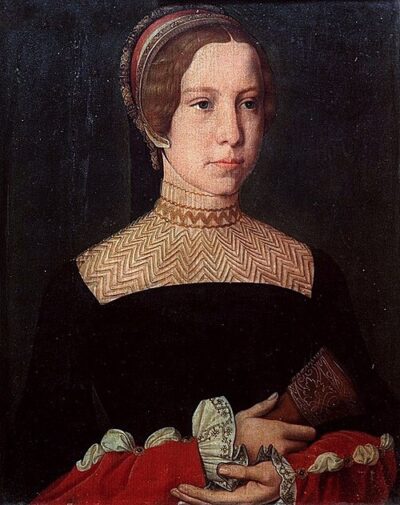
Madeleine de La Tour d'Auvergne
Madeleine de La Tour d'Auvergne was a Duchess consort of Urbino and Duchess suo jure of Lauragais. Born 1498, in Auvergne. Died April 28, 1519, in Florence.
Facts
12 facts · 2 confirmed by two sources · 2 cited · 8 from one source
What’s different
- Born: we show 1498 (Confirmed). Wikidata also lists 1495
Where this comes from
Papalocal keeps its own record. It started from these sources; what each one said is kept here as it was copied, so a change on their side never changes this page by itself. Tap one to read its version.
What Wikidata says · copied November 18, 2026 · revision 2567291847
- Described as
- Duchess consort of Urbino and Duchess suo jure of Lauragais
- Born
- 1498; 1495 · 1 reference
- Died
- April 28, 1519 · 2 references
- Born in
- Auvergne
- Died in
- Florence · 1 reference
- Cause of death
- puerperal infection
- Citizen of
- France
- Occupation
- aristocrat
- Spouse
- Lorenzo de' Medici, Duke of Urbino (1518–) · 1 reference
- Children
- Catherine de' Medici · 1 reference
- Father
- Jean III, Comte D'Auvergne
- Mother
- Jeanne of Bourbon, Duchess of Bourbon
- Siblings
- Anne de La Tour d'Auvergne
- Wikipedias with a page
- 21
Wikidata item Q272509 (wikidata.org/wiki/Q272509), public domain (CC0). Copied November 18, 2026.
What Wikipedia says · copied November 18, 2026 · revision 1358336910
Madeleine de La Tour d'Auvergne (1498 – 28 April 1519), was the penultimate representative of the senior branch of an ancient French House of La Tour d'Auvergne. She is best known for being the mother of Catherine de' Medici, the future Queen of France.
- Born, in its opening lines
- 1498
- Died, in its opening lines
- April 28, 1519
From the Wikipedia article “Madeleine de La Tour d'Auvergne” (en.wikipedia.org/wiki/Madeleine_de_La_Tour_d'Auvergne), by its contributors, under CC BY-SA 4.0 (creativecommons.org/licenses/by-sa/4.0/). Copied November 18, 2026; not changed.
Confirmed Two sources agree. Cited One source, and it names where it got it. One source One source, without a reference of its own. Sources disagree The sources disagree. We show the best-supported value and keep theirs below.
