
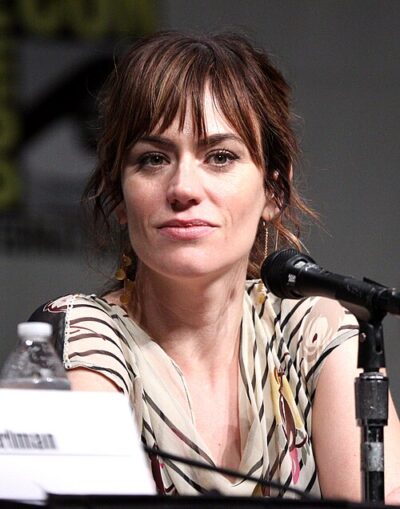
Maggie Siff
Maggie Siff is an American actress. Born June 21, 1974, in The Bronx. Educated at Bronx High School of Science and Bryn Mawr College.
Facts
11 facts · 1 confirmed by two sources · 2 cited · 8 from one source
Where this comes from
Papalocal keeps its own record. It started from these sources; what each one said is kept here as it was copied, so a change on their side never changes this page by itself. Tap one to read its version.
What Wikidata says · copied November 15, 2026 · revision 2567759168
- Described as
- American actress
- Born
- June 21, 1974 · 1 reference
- Born in
- The Bronx · 1 reference
- Citizen of
- United States
- Occupation
- stage actor; film actor; television actor; actor · 2 references
- Education
- Bronx High School of Science; Bryn Mawr College; New York University Tisch School of the Arts
- Spouse
- Paul Ratliff (2012–)
- Wikipedias with a page
- 30
Wikidata item Q242208 (wikidata.org/wiki/Q242208), public domain (CC0). Copied November 15, 2026.
What Wikipedia says · copied November 15, 2026 · revision 1381333060
Maggie Siff (born June 21, 1974) is an American actress. Her most notable television roles have included department store heiress Rachel Menken Katz on the AMC drama Mad Men, Dr. Tara Knowles on the FX drama Sons of Anarchy for which she was twice nominated for the Critics' Choice Television Award for Best Supporting Actress in a Drama Series, and psychiatrist Wendy Rhoades on the Showtime series Billions.
She has also had roles in the films Push (2009) as Teresa Stowe, and Leaves of Grass (2010) as Rabbi Renannah Zimmerman. She starred in the independent film A Woman, a Part (2016) and had a minor role in the drama film One Percent More Humid (2017). She is the television spokesperson for the robo-advisor service Betterment.
- Born, in its opening lines
- June 21, 1974
From the Wikipedia article “Maggie Siff” (en.wikipedia.org/wiki/Maggie_Siff), by its contributors, under CC BY-SA 4.0 (creativecommons.org/licenses/by-sa/4.0/). Copied November 15, 2026; not changed.
Confirmed Two sources agree. Cited One source, and it names where it got it. One source One source, without a reference of its own. Sources disagree The sources disagree. We show the best-supported value and keep theirs below.
