
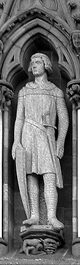
Magnus Erlendsson, Earl of Orkney
Magnus Erlendsson, Earl of Orkney was an Earl of Orkney from 1106 to c. 1117. Born 1075, in Egilsay. Died April 16, 1117, in Egilsay.
Facts
9 facts · 1 confirmed by two sources · 2 cited · 5 from one source · 1 where the sources disagree
What’s different
- Born: we show 1075 (Sources disagree). Wikipedia says 1080
Where this comes from
Papalocal keeps its own record. It started from these sources; what each one said is kept here as it was copied, so a change on their side never changes this page by itself. Tap one to read its version.
What Wikidata says · copied November 17, 2026 · revision 2552384085
- Described as
- Earl of Orkney from 1106 to c. 1117
- Other names
- Saint Magnus, Magnus the Martyr, Saint Magnus, Jarl of Orkney
- Born
- 1075
- Died
- April 16, 1117 · 1 reference
- Born in
- Egilsay
- Died in
- Egilsay · 1 reference
- Buried in
- St Magnus Cathedral, Kirkwall
- Citizen of
- Norway
- Father
- Erlend Thorfinnsson · 1 reference
- Mother
- Thora Sumarlididottir · 1 reference
- Siblings
- Gunhild (?) · 1 reference
- Wikipedias with a page
- 24
Wikidata item Q522317 (wikidata.org/wiki/Q522317), public domain (CC0). Copied November 17, 2026.
What Wikipedia says · copied November 17, 2026 · revision 1383944449
Saint Magnus Erlendsson, Earl of Orkney (1080 – 16 April 1117), sometimes known as Magnus the Martyr, was Earl of Orkney from 1106 to about 1117.
Magnus's grandparents, Thorfinn the Mighty, Jarl of Orkney and his wife Ingibiorg Finnsdottir, had two sons, Erlend and Paul, who were twins. Through Ingibiorg's father Finn Arnesson and his wife, the family was related to the Norwegian Kings Olav II and Harald II.
- Born, in its opening lines
- 1080
- Died, in its opening lines
- April 16, 1117
From the Wikipedia article “Magnus Erlendsson, Earl of Orkney” (en.wikipedia.org/wiki/Magnus_Erlendsson,_Earl_of_Orkney), by its contributors, under CC BY-SA 4.0 (creativecommons.org/licenses/by-sa/4.0/). Copied November 17, 2026; not changed.
Confirmed Two sources agree. Cited One source, and it names where it got it. One source One source, without a reference of its own. Sources disagree The sources disagree. We show the best-supported value and keep theirs below.
