
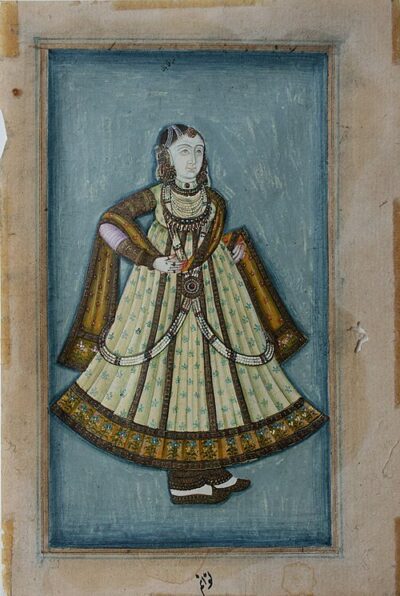
Mah Laqa Bai was a poet. Born April 7, 1768, in Aurangabad. Died August 1, 1824, in Hyderabad.
Facts
20 facts · 2 confirmed by two sources · 4 cited · 14 from one source
Where this comes from
Papalocal keeps its own record. It started from these sources; what each one said is kept here as it was copied, so a change on their side never changes this page by itself. Tap one to read its version.
What Wikidata says · copied November 18, 2026 · revision 2568929287
- Described as
- poet
- Other names
- Chanda Bibi, Mah Laqa Chanda, Chanda
- Born
- April 7, 1768
- Died
- August 1, 1824
- Born in
- Aurangabad
- Died in
- Hyderabad · 1 reference
- Buried in
- Moula-Ali
- Name at birth
- چندا بی بی
- Citizen of
- Hyderabad State
- Occupation
- politician; singer; courtesan · 1 reference; poet · 1 reference; soldier; writer; dancer · 1 reference
- Sport
- archery; javelin throw; equestrian sport
- Genre
- ghazal
- Instrument
- voice
- Lived in
- Nampally mandal
- Wikipedias with a page
- 21
Wikidata item Q6732616 (wikidata.org/wiki/Q6732616), public domain (CC0). Copied November 18, 2026.
What Wikipedia says · copied November 18, 2026 · revision 1380729022
Mah Laqa Bai (7 April 1768 – August 1824), born Chanda Bai, and sometimes referred to as Mah Laqa Chanda, was an Indian 18th century Urdu poet, tawaif
and philanthropist based in Hyderabad. In 1824, she became the first female poet to have a diwan (collection of poems) of her work, a compilation of Urdu Ghazals named Gulzar-e-Mahlaqa, published posthumously. She lived in a period when Dakhini (a version of Urdu) was making its transition into the highly Persianized Urdu. Her literary contributions provide insight into such linguistic transformations in southern India.
Mah Laqa Bai was an influential tawaif of the Deccan; the Nizam, ruler of Hyderabad, appointed her to the omarah (the highest nobility), and as a close affiliate at the court, she was discussed on state policies and accomplished assigned diplomatic engagements. An expert in spear throwing, tent pegging and archery, she accompanied Nizam II in three battles, hunting expeditions and camping. She moved in palanquin with guards and drummers announcing her arrival.
In 2010, her memorial in Hyderabad, which houses her tomb, caravanserai and a mosque, was restored using funds donated by the Federal government of the United States.
- Born, in its opening lines
- April 7, 1768
- Died, in its opening lines
- August 1824
From the Wikipedia article “Mah Laqa Bai” (en.wikipedia.org/wiki/Mah_Laqa_Bai), by its contributors, under CC BY-SA 4.0 (creativecommons.org/licenses/by-sa/4.0/). Copied November 18, 2026; not changed.
Confirmed Two sources agree. Cited One source, and it names where it got it. One source One source, without a reference of its own. Sources disagree The sources disagree. We show the best-supported value and keep theirs below.
