
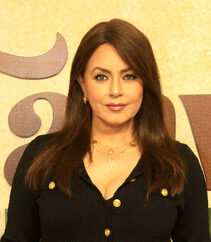
Mahima Chaudhry
Mahima Chaudhry is an Indian actress. Born September 13, 1973, in Darjeeling. Educated at University of North Bengal.
Facts
8 facts · 1 confirmed by two sources · 1 cited · 6 from one source
Where this comes from
Papalocal keeps its own record. It started from these sources; what each one said is kept here as it was copied, so a change on their side never changes this page by itself. Tap one to read its version.
What Wikidata says · copied November 16, 2026 · revision 2565660956
- Described as
- Indian actress
- Born
- September 13, 1973 · 1 reference
- Born in
- Darjeeling
- Citizen of
- India
- Occupation
- model; film actor · 1 reference; television actor
- Education
- University of North Bengal
- Spouse
- Bobby Mukherji (2006–)
- Wikipedias with a page
- 41
Wikidata item Q2568389 (wikidata.org/wiki/Q2568389), public domain (CC0). Copied November 16, 2026.
What Wikipedia says · copied November 16, 2026 · revision 1378874882
Mahima Chaudhry (born Ritu Chaudhry; 13 September 1973) is an Indian actress who primarily works in Hindi films. Mahima did a few modelling assignments and television commercials before venturing into films, with the 1997 romantic drama film Pardes, for which she received the Filmfare Award for Best Female Debut.
She played the leading lady in several films, including Daag (1999), Dhadkan (2000), and Kurukshetra (2000), and received critical recognition for her performances in Dil Kya Kare (1999), Lajja (2001), Dobara (2004) and The Film (2005) earning nominations for the Filmfare Award for Best Supporting Actress for Dil Kya Kare and Dhadkan. This was followed by a hiatus and intermittent acting roles.
- Born, in its opening lines
- September 13, 1973
From the Wikipedia article “Mahima Chaudhry” (en.wikipedia.org/wiki/Mahima_Chaudhry), by its contributors, under CC BY-SA 4.0 (creativecommons.org/licenses/by-sa/4.0/). Copied November 16, 2026; not changed.
Confirmed Two sources agree. Cited One source, and it names where it got it. One source One source, without a reference of its own. Sources disagree The sources disagree. We show the best-supported value and keep theirs below.
