
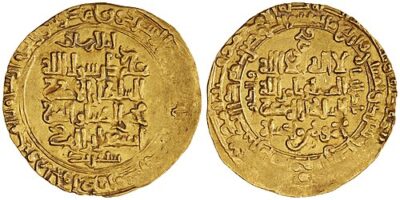
Mahmud I of Great Seljuk
Mahmud I of Great Seljuk was a nominal seljuk Sultan. Born 1088. Died November 1094, in Isfahan. Positions held include Sultan of the Seljuq Empire (1092–1094).
Facts
14 facts · 2 confirmed by two sources · 1 cited · 11 from one source
Where this comes from
Papalocal keeps its own record. It started from these sources; what each one said is kept here as it was copied, so a change on their side never changes this page by itself. Tap one to read its version.
What Wikidata says · copied November 17, 2026 · revision 2570391268
- Described as
- nominal seljuk Sultan (1092–1094)
- Other names
- Nasir ad-Din Mahmud, Nasir al-Din Mahmud I
- Born
- 1088
- Died
- November 1094
- Died in
- Isfahan
- Cause of death
- smallpox
- Citizen of
- Seljuk Empire
- Occupation
- politician · 1 reference
- Positions held
- Sultan of the Seljuq Empire (1092–1094)
- Father
- Malik-Shah I
- Mother
- Terken Khatun · 1 reference
- Siblings
- Barkiyaruq; Muhammad I Tapar; Ahmad Sanjar; Isma Khatun; Gawhar Khatun
- Wikipedias with a page
- 29
Wikidata item Q1252100 (wikidata.org/wiki/Q1252100), public domain (CC0). Copied November 17, 2026.
What Wikipedia says · copied November 17, 2026 · revision 1378615105
Nasir al-Din Mahmud I (Persian: ناصرالدین محمود یکم)(1088–1094) was an infant sultan of the Seljuk Empire from 1092 to 1094, with most power held by his mother Terken Khatun. He was a younger son of the former sultan Malik Shah I and proclaimed sultan at Baghdad by the caliph al-Muqtadi (r. 1075–1094). Under his notional reign, the empire built by his father and Alp Arslan fragmented. After Mahmud's forces lost a battle at Borujerd, he and his mother were assassinated by the family of the former vizir Nizam al-Mulk.
- Born, in its opening lines
- 1088
- Died, in its opening lines
- 1094
From the Wikipedia article “Mahmud I (Seljuk sultan)” (en.wikipedia.org/wiki/Mahmud_I_(Seljuk_sultan)), by its contributors, under CC BY-SA 4.0 (creativecommons.org/licenses/by-sa/4.0/). Copied November 17, 2026; not changed.
Confirmed Two sources agree. Cited One source, and it names where it got it. One source One source, without a reference of its own. Sources disagree The sources disagree. We show the best-supported value and keep theirs below.
