
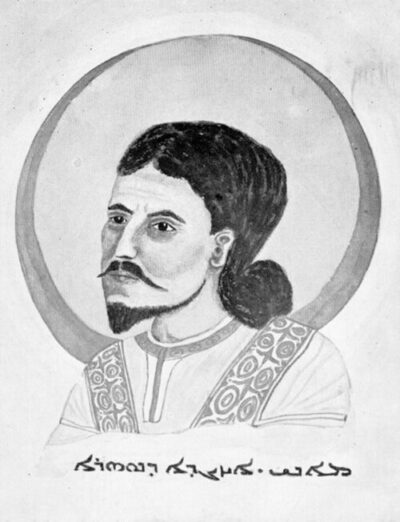
Mani
Mani was the 3rd century prophet and founder of Manichaeism. Born April 14, 216, in Ctesiphon. Died March 2, 274, in Gundeshapur.
Facts
16 facts · 0 confirmed by two sources · 1 cited · 14 from one source · 1 where the sources disagree
What’s different
- Died: we show March 2, 274 (Sources disagree). Wikidata also lists February 26, 277
Where this comes from
Papalocal keeps its own record. It started from these sources; what each one said is kept here as it was copied, so a change on their side never changes this page by itself. Tap one to read its version.
What Wikidata says · copied November 16, 2026 · revision 2558145575
- Described as
- 3rd century prophet and founder of Manichaeism
- Other names
- Suraik, Manes, Kurbik
- Born
- April 14, 216
- Died
- March 2, 274 · 1 reference; February 26, 277 · 1 reference
- Born in
- Ctesiphon · 2 references
- Died in
- Gundeshapur
- Cause of death
- flaying
- Citizen of
- Parthian Empire; Sasanian Empire
- Occupation
- theologian; writer; prophet; religious leader; philosopher; poet
- Father
- Pātik
- Mother
- Samaneh Nasri
- Religion
- Manichaeism
- Wikipedias with a page
- 74
Wikidata item Q203922 (wikidata.org/wiki/Q203922), public domain (CC0). Copied November 16, 2026.
What Wikipedia says · copied November 16, 2026 · revision 1385786947
Mani (; c. April AD 216 – 2 March AD 274 or 26 February AD 277) was an Iranian prophet and the founder of Manichaeism, a religion most prevalent in late antiquity.
Mani was born in or near Ctesiphon (south of modern Baghdad) in Mesopotamia, at the time part of the Parthian Empire. Seven of his major works were written in Syriac, and the eighth, dedicated to the Sasanian emperor Shapur I, was written in Middle Persian. He died shortly after being imprisoned by Bahram I in Gundeshapur.
From the Wikipedia article “Mani (prophet)” (en.wikipedia.org/wiki/Mani_(prophet)), by its contributors, under CC BY-SA 4.0 (creativecommons.org/licenses/by-sa/4.0/). Copied November 16, 2026; not changed.
Confirmed Two sources agree. Cited One source, and it names where it got it. One source One source, without a reference of its own. Sources disagree The sources disagree. We show the best-supported value and keep theirs below.
