
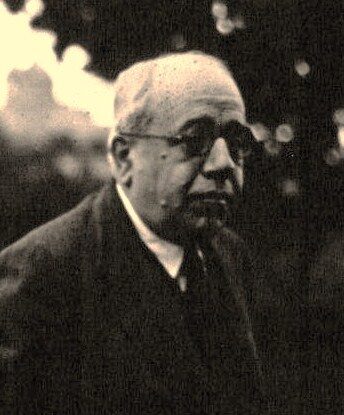
Manuel Azaña
Manuel Azaña was a prime minister of Spain, president of Spain. Born January 10, 1880, in Casa natal de Manuel Azaña. Died November 3, 1940, in Montauban. Positions held include President of the Council of Ministers (2 times) (1931–1936), president of the Second Republic of Spain (1936–1939) and ministro de la Guerra (1931–1933). Educated at University of Zaragoza and Universidad Central. Awards include Concurso Nacional de Literatura (Spain, 1923-1973).
Facts
24 facts · 2 confirmed by two sources · 7 cited · 15 from one source
What’s different
- Died: we show November 3, 1940 (Confirmed). Wikidata also lists November 4, 1940
Where this comes from
Papalocal keeps its own record. It started from these sources; what each one said is kept here as it was copied, so a change on their side never changes this page by itself. Tap one to read its version.
What Wikidata says · copied November 16, 2026 · revision 2566534853
- Described as
- prime minister of Spain, president of Spain (1880-1940)
- Other names
- Manuel Azaña Díaz
- Born
- January 10, 1880 · 12 references
- Died
- November 3, 1940 · 5 references; November 4, 1940 · 1 reference
- Born in
- Casa natal de Manuel Azaña
- Died in
- Montauban · 3 references
- Buried in
- Montauban
- Citizen of
- Spain
- Occupation
- politician · 3 references; lawyer · 1 reference; writer · 2 references
- Positions held
- President of the Council of Ministers (2 times) (1931–1936); president of the Second Republic of Spain (1936–1939); ministro de la Guerra (1931–1933); Member of the Cortes republicanas (1931–1939) · 1 reference; Head of State of Spain (1936–1939); Madrilgo Ateneoko presidentea (1930–1932)
- Political party
- Republican Left
- Education
- University of Zaragoza; Universidad Central; Real Centro Universitario Escorial-Maria Christina; Instituto Cardenal Cisneros
- Awards
- Concurso Nacional de Literatura (Spain, 1923-1973) (1926) · 1 reference
- Spouse
- Dolores Rivas Cherif (1929–1940) · 1 reference
- Father
- Esteban Azaña
- Siblings
- Gregorio Azaña Díaz
- Wikipedias with a page
- 64
Wikidata item Q203708 (wikidata.org/wiki/Q203708), public domain (CC0). Copied November 16, 2026.
What Wikipedia says · copied November 16, 2026 · revision 1371114998
Manuel Azaña Díaz (Spanish pronunciation: [maˈnwel aˈθaɲa]; 10 January 1880 – 3 November 1940) was a Spanish politician who served as Prime Minister of the Second Spanish Republic (1931–1933 and 1936), organizer of the Popular Front in 1935 and the last President of the Republic (1936–1939). He has been called the father of the Republic and was the most prominent leader of the Republican cause during the Spanish Civil War of 1936–1939.
A published author in the 1910s, he stood out in the pro-Allies camp during World War I. He was sharply critical towards the Generation of '98, the reimagination of the Spanish Middle Ages, Imperial Spain and the 20th century yearnings for a praetorian refurbishment of the country. Azaña followed instead the examples of the French Enlightenment and the Third French Republic, and took a political quest for democracy in the 1920s while defending the notion of homeland as the "democratic equality of all citizens towards the law" that made him embrace republicanism.
After the Proclamation of the Second Spanish Republic in April 1931, Azaña became Minister of War of the Provisional Government and enacted military reform, looking to develop a modern armed forces with fewer army officers. He later became Prime Minister in October 1931. In 1934 he founded the Republican Left party.
The Spanish Civil War broke out while he was President of Spain. With the defeat of the Republic in 1939, he fled to France, resigned from office, and died in exile only a year later at age 60.
- Born, in its opening lines
- January 10, 1880
- Died, in its opening lines
- November 3, 1940
From the Wikipedia article “Manuel Azaña” (en.wikipedia.org/wiki/Manuel_Azaña), by its contributors, under CC BY-SA 4.0 (creativecommons.org/licenses/by-sa/4.0/). Copied November 16, 2026; not changed.
Confirmed Two sources agree. Cited One source, and it names where it got it. One source One source, without a reference of its own. Sources disagree The sources disagree. We show the best-supported value and keep theirs below.
