
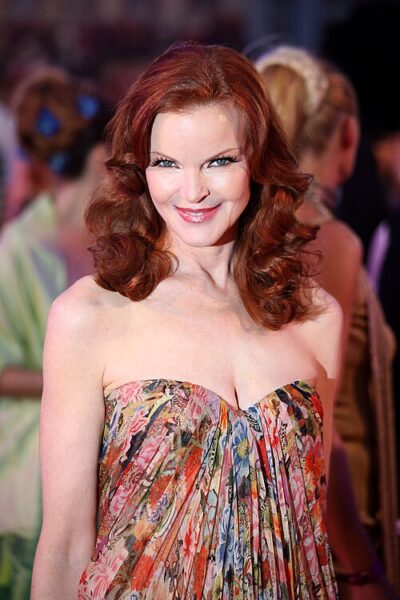
Marcia Cross
Marcia Cross is an American actress. Born March 25, 1962, in Marlborough. Educated at Juilliard School and Antioch University.
Facts
9 facts · 1 confirmed by two sources · 1 cited · 7 from one source
Where this comes from
Papalocal keeps its own record. It started from these sources; what each one said is kept here as it was copied, so a change on their side never changes this page by itself. Tap one to read its version.
What Wikidata says · copied November 13, 2026 · revision 2568873639
- Described as
- American actress
- Other names
- Marcia Anne Cross
- Born
- March 25, 1962 · 2 references
- Born in
- Marlborough
- Citizen of
- United States
- Occupation
- actor · 1 reference; television actor; film actor
- Education
- Juilliard School; Antioch University; Antioch College
- Wikipedias with a page
- 62
Wikidata item Q189547 (wikidata.org/wiki/Q189547), public domain (CC0). Copied November 13, 2026.
What Wikipedia says · copied November 13, 2026 · revision 1378055211
Marcia Cross (born March 25, 1962) is an American actress. A graduate of Juilliard, she started acting in the 1980s with roles on the daytime soap operas The Edge of Night (1984), Another World (1986), and One Life to Live (1986–1988), before taking on roles in the primetime soaps Knots Landing (1991–1992) and as Kimberly Shaw on Melrose Place (1992–1997).
Cross garnered wider recognition for her portrayal of Bree Van de Kamp in the ABC television series Desperate Housewives (2004–2012), for which she received various accolades including a Satellite Award, two Actor Awards and nominations for three Golden Globes and the Primetime Emmy Award for Outstanding Lead Actress in a Comedy Series. She subsequently had a recurring role as President Claire Haas in the ABC series Quantico (2015–2017).
- Born, in its opening lines
- March 25, 1962
From the Wikipedia article “Marcia Cross” (en.wikipedia.org/wiki/Marcia_Cross), by its contributors, under CC BY-SA 4.0 (creativecommons.org/licenses/by-sa/4.0/). Copied November 13, 2026; not changed.
Confirmed Two sources agree. Cited One source, and it names where it got it. One source One source, without a reference of its own. Sources disagree The sources disagree. We show the best-supported value and keep theirs below.
