
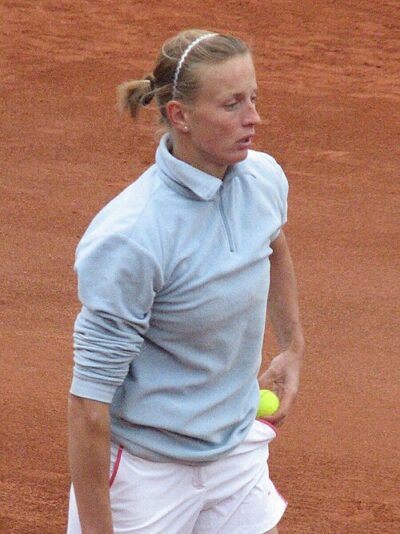
Maret Ani
Maret Ani is an Estonian tennis player. Born January 31, 1982, in Tallinn. Teams include Estonia Billie Jean King Cup team (1998–). Educated at Tallinn Secondary School of Science and Tallinn Secondary School for Adults.
Facts
12 facts · 1 confirmed by two sources · 6 cited · 5 from one source
Where this comes from
Papalocal keeps its own record. It started from these sources; what each one said is kept here as it was copied, so a change on their side never changes this page by itself. Tap one to read its version.
What Wikidata says · copied November 17, 2026 · revision 2520180911
- Described as
- Estonian tennis player (born 1982)
- Born
- January 31, 1982 · 2 references
- Born in
- Tallinn · 1 reference
- Citizen of
- Estonia
- Occupation
- tennis player (1997–)
- Education
- Tallinn Secondary School of Science · 1 reference; Tallinn Secondary School for Adults · 1 reference; Rakvere Adult Secondary School · 1 reference
- Teams
- Estonia Billie Jean King Cup team (1998–)
- Sport
- tennis · 1 reference
- Siblings
- Pille Tali · 1 reference
- Lived in
- Rakvere
- Height
- 1.75 m (5 ft 9 in) · 1 reference
- Wikipedias with a page
- 24
Wikidata item Q855458 (wikidata.org/wiki/Q855458), public domain (CC0). Copied November 17, 2026.
What Wikipedia says · copied November 17, 2026 · revision 1372652444
Maret Ani (born 31 January 1982) is a retired tennis player from Estonia.
At the start of 2006, she was the top-ranked player in Estonia, before losing that spot to Kaia Kanepi.
Ani was a junior basketball champion, but devoted herself to tennis from the age of 14. She moved to Italy three years later, after finding sponsorship for coaching. She was coached initially by Aita Põldma and later by Pierfrancesco Restelli.
Ani first played for the Estonia Fed Cup team in 1998.
- Born, in its opening lines
- January 31, 1982
From the Wikipedia article “Maret Ani” (en.wikipedia.org/wiki/Maret_Ani), by its contributors, under CC BY-SA 4.0 (creativecommons.org/licenses/by-sa/4.0/). Copied November 17, 2026; not changed.
Confirmed Two sources agree. Cited One source, and it names where it got it. One source One source, without a reference of its own. Sources disagree The sources disagree. We show the best-supported value and keep theirs below.
