
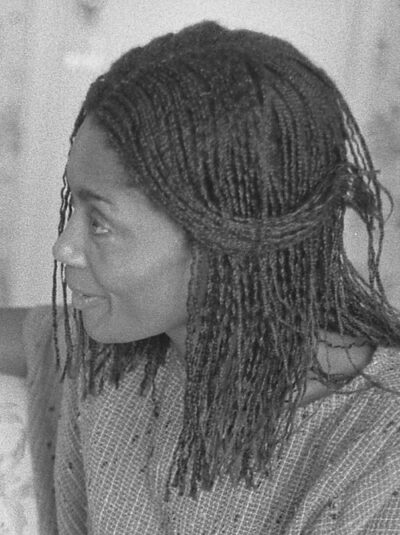
Margaret Avery
Margaret Avery is an American actress. Born January 20, 1944, in Mangum. Educated at Point Loma High School and San Francisco State University.
Facts
12 facts · 0 confirmed by two sources · 3 cited · 9 from one source
Where this comes from
Papalocal keeps its own record. It started from these sources; what each one said is kept here as it was copied, so a change on their side never changes this page by itself. Tap one to read its version.
What Wikidata says · copied November 15, 2026 · revision 2562734060
- Described as
- American actress
- Born
- January 20, 1944 · 1 reference
- Born in
- Mangum
- Citizen of
- United States
- Occupation
- actor · 1 reference; stage actor; television actor; film actor; singer · 2 references
- Education
- Point Loma High School; San Francisco State University (–1965)
- Lived in
- Los Angeles
- Website
- http://margaretavery.com
- Wikipedias with a page
- 33
Wikidata item Q271846 (wikidata.org/wiki/Q271846), public domain (CC0). Copied November 15, 2026.
What Wikipedia says · copied November 15, 2026 · revision 1372188713
Margaret Avery is an American actress. She began her career appearing on stage and later had starring roles in films including Cool Breeze (1972), Which Way Is Up? (1977), Scott Joplin (1977) which earned her an NAACP Image Award nomination, and The Fish That Saved Pittsburgh (1979). She was nominated for an Academy Award for Best Supporting Actress for her portrayal of Shug Avery in the period drama film The Color Purple (1985).
Avery continued appearing in films like Blueberry Hill (1988), White Man's Burden (1995), Welcome Home Roscoe Jenkins (2008), Meet the Browns (2008), and Proud Mary (2018). From 2013 to 2019, Avery starred as Helen Patterson, lead character's mother, in the BET drama series Being Mary Jane.
From the Wikipedia article “Margaret Avery” (en.wikipedia.org/wiki/Margaret_Avery), by its contributors, under CC BY-SA 4.0 (creativecommons.org/licenses/by-sa/4.0/). Copied November 15, 2026; not changed.
Confirmed Two sources agree. Cited One source, and it names where it got it. One source One source, without a reference of its own. Sources disagree The sources disagree. We show the best-supported value and keep theirs below.
